Author: Sheila Marler

  • My Brother’s Keeper and The Letter

    There are several criticisms of the My Brother’s Keeper initiative, but they are not what I want to talk about here. I think the most meaningful part of this discussion is a letter to President Obama voicing concerns about his initiative and signed by 200 black men. Yes, it’s another criticism, but the thing I want to talk about is the signers’ understanding that efforts at reform won’t succeed if black men leave their mothers and sisters and daughters behind. And that is exactly what such programs require them to do.

    The letter’s signers are concerned that President Obama’s initiative for helping men and boys of color lacks a comparable focus on girls and women. To be clear, they don’t want a moratorium on such initiatives, but they think this program ignores the importance of women and girls in their own right—that is, the importance of women and girls to their community. I hope there will be more debate on the supposed benefits of the addition of women to this top-down program for men, but I think the signers have hit on a sound principle that should be emphasized.

    Modern religions tell us that humans are the offspring of fallen Man. On the other hand, I’ve said humans have the potential to be great. However, I wasn’t making a case for the genetic superiority of the species. I meant to say that humans are great when they make their communities work for everyone. Human greatness only becomes visible in a true community.

    Maybe My Brother’s Keeper will have a good effect. I hope it does. But I don’t think trickle-down social schemes will ever bring lasting change. Real change begins in a community and spreads outward from there. I think this letter illustrates that you don’t need help from governments or billionaires to understand that. And in any case, it seems the kind of community these signers imagine is not what the creators of My Brother’s Keeper had in mind.

    Regardless of the immediate effect of this letter, it illustrates a powerful principle. It might just be the start of something great.

  • Ukraine: The Corporate Annexation. “For Cargill, Chevron, Monsanto, It’s a Gold Mine of Profits”

    Considering the big part played by corporate greed in the run-up to World War II, and the confusion of analysts about U.S. policy in Ukraine, I thought it might be interesting to find out what American corporations have against Vladimir Putin. I found an article on the Global Research website that I’ll share here. It seems if you are American, you can’t defend your own country without defending the devil. Read this.

    Ukraine: The Corporate Annexation. “For Cargill, Chevron, Monsanto, It’s a Gold Mine of Profits”.

  • Plato’s Iron Fist in the Soviet Union

    I’ve been saying that we need to reexamine the influence of the ideas of Plato and Aristotle in politics and religion. As it happens, that conversation is already underway. The following discussion is based on an article about Plato’s influence in Russia. Those who like to divide Russian and Western thought may be shocked to discover Plato’s Iron Fist in the Soviet Union.  Mikhail Epstein, Professor of Russian and Cultural Theory and Co-Director of the Center for Humanities Innovation, identifies the Russian approach to Plato as the source of totalitarianism in the Soviet Union. However, the Russian experience has as much meaning for the West as it does for Russia.

    In this article I will demonstrate that both Marxist and non-Marxist ideologies are influenced by Plato’s authoritarian tendencies.

    What is Philosophy?

    Epstein begins by asking, What is philosophy? He answers by saying that although there is no simple, universal definition, the most ‘credible attempt is a nominalistic reference: philosophy is what Plato and Aristotle, Kant and Hegel were occupied with.’ Then he provides what he calls the most broadly cited definition, that of A. Whitehead: ‘philosophy is a series of footnotes to Plato.’1

    Plato's Iron Fist in the Soviet Union
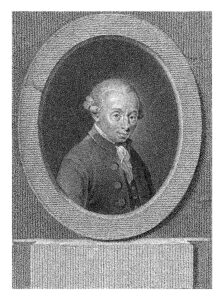
    Immanuel Kant

    Russian Philosophy is Part of the Western Intellectual Tradition

    If this is accepted, he argues, Russian philosophy must be seen as a part of the Western intellectual tradition. Russia, and especially the Soviet Union, has been unique in its literal incarnation of the teachings of Plato. This was made possible by the tendency of Russian thought to ‘philosophize reality, to transform it into a transparent kingdom of ideas.’ In the Soviet Union, this resulted in philosophy becoming a supreme legal and political institution, and ‘in its unrestricted dominion [it] was equivalent to madness.’ However, non-Marxist and anti-Marxist thinkers in Russia belong to the same tradition. The hard-won understanding they achieved in this process can provide an invaluable lesson for the West.

    Non-Marxist and Anti-Marxist thinkers in Russia also Belong to the Platonic Tradition

    “One might even say that the philosophy of the Soviet epoch is the final stage of the development and embodiment of Plato’s ideas in the Western world. During this stage, the project of ideocracy came to a complete realization and exhausted itself. The czardom of ideas arrived at the threshold of self-destruction because the substance of Being resisted the yoke of idealism, and it is now in the process of returning to its primordial identity. Thus Russian philosophy both summarizes and punctuates more than two thousand years of the Platonic tradition and points the way for a return to foundations which are not susceptible to ideologic perversions.

    “A relatively short period of years sums up a two-millenium adventure of Western thought which escorted Plato in his search for the world of pure ideas. Among these footnotes to Plato, Russian philosophy appears to the attentive eye as the final entry, signifying ‘The End’.”

    Is the Problem Confined to One Particular Approach to Plato?

    Still, I suppose someone could argue that the problem is not Plato, but one particular approach to Plato. Epstein mentions this as a possibility, but says the question has yet to be answered.

    “The question is: Now that Platonism in its Marxist guise, has been overcome by Russian thought, is it still possible to find inspiration in Platonism as such, in its sublime idealistic and religious interpretations? Or does the experience of Russian history convincingly argue that Platonism has exhausted itself as a spiritual resource for humanity and that all attempts to Christianize it are just wishful illusions? (Russia slipped into the pagan version of Platonism, while in the West, Plato’s ideas were Christianized.)

    “Whatever the answer may be, it is indisputable that the ongoing relevance of Platonism for Russian thought will provide the ground for its intensive dialogue with…Western philosophy also rooted in Plato’s heritage.”2

  • Putin Requests Dialogue With Kiev

    Previously I said that it was Putin’s turn to respond to Ukraine’s attempts to restore harmony. Recently he has demonstrated his good intentions. He sent a special envoy, Vladimir Lukin, to the region to help facilitate the release of international military observers being held in Slovyansk. He’s also called for dialogue between Kiev and the separatists. ((Ukraine Resumes Operations Against Separatists, Stratfor Global Intelligence. May 2, 2014. Available: http://www.stratfor.com/analysis/ukraine-resumes-operations-against-separatists))

    According to one analyst, the framework of the Geneva Accord still has the potential to promote peace, in spite of the fact that it appears to have broken down. ((Pro-Russian Separatism Poses a Threat in Eastern Ukraine. Stratfor Global Intelligence, May 1, 2014. available: http://www.stratfor.com/analysis/pro-russian-separatism-poses-threat-eastern-ukraine)) The least the West can do at this point is take Putin seriously. It can’t be denied that he has clearly defined Russia’s stake in the region and in this conflict. The degree to which Ukraine and the West are willing to compromise with him will determine the extent of Russian aggression.

  • Justice is a Choice

    I’ve changed my tune on Ukraine. What made the difference? We live in an us-or-them world in which people are eventually forced to take sides. This is not only true of Ukraine. Even if Ukraine is never anything more than a waiting game there will always be places in the world where conflict is possible and where political leaders feel they must protect their interests. Unfortunately, the last four posts illustrate how this can derail the conversation. The us-or-them world won’t change unless we change it, and if we want to change it we have to continue the conversation.

    How does change happen? I’ve begun to think that on a certain level it’s simply a choice. However, before we can choose, the choices must be discovered and described. One of the most basic choices would be peace and prosperity—peace is a choice, not a happy accident. The basis of peace and prosperity is justice. What does justice look like? That remains to be discovered, but we could start by describing what injustice looks like.

    Reformers always base their ideas on historical models. The model for our age was constructed from the writings of Plato and Aristotle. Plato’s and Aristotle’s ideas have even influenced the world’s main religions. The first step in investigating our choices would be to question these ideas and the structure of inequality they have created. I’ve argued that the creation of this structure was no mistake; it was deliberate. Yet every reformer accepts it as a basis for society.

    That discussion could go on for years, but I’m trying to stay with the idea of choice. As an example I’ll use my theory that inequality begins with the subjugation of women. Even though oppression is personal to the oppressed, on a policy level it is impersonal and utilitarian. The oppression of women is the foundation of a particular social and political organization. This may not be very encouraging, but it could also indicate that the oppression of women is not an unchanging, inescapable fact of human existence. It’s part of a specific cultural construct.

    In my opinion it would be a mistake to assume from this that women must change the system single-handedly. I don’t think that’s how it works. While there are plenty of women today who speak out against patriarchy, I suspect that women as a group are no threat to the status quo. What does this say about our culture, or about women…or about change? There have been woman-centered communities in the past. Is human nature different today? How about the female gender? Maybe the world suffers from a lack of female role models and archetypes and we just need a female priesthood and a system of goddess worship. Again, I don’t think so.

    My model is Minoa. Some will object to this on grounds that we don’t have enough information about the way the Minoans lived. However we do have archaeological evidence that they prospered for at least 3,000 years, and their city was never fortified. The adjective normally used to describe Minoan civilization is ‘confident’. By the way, those arguing for a return to goddess worship also admit that they know nothing about it. Yet the same people—the ones I’m familiar with are university professors—accept the idea of human sacrifice.

    Others might object to my using Minoa as a model because I reject goddess worship. Maybe they remember reading somewhere that Minoa did indeed have goddess worship. This requires more discussion as well, but apparently this belief is due to Jane Ellen Harrison’s influence on the interpretation of Minoan artifacts. I intend to discuss this later also, but I’ll say that although Harrison claimed to be revealing ancient Greek religion, her books are categorized today as Hermetic philosophy. Harrison was a colleague of Charles Darwin. And it is no dark conspiracy that our science is hermetic. It’s descended from the Rosicrucians by way of the Royal Society.

    As long as I seem to be making an outline of the conversation, I’ll also mention that Protestant Christianity is heavily influenced by Hermeticism. I once thought that if you found a system with elements of magic and the occult, it must be a pre-Christian, or non-Christian system. That’s not true. Protestantism is indebted to mystical and occult beliefs. In fact, elements of the occult can be found in all religions. The same goes for our form of democracy. For this reason, I would argue that Christianity can’t be excluded from the conversation. In fact, it seems it would be impossible to carry on an American conversation about the past, the present, or the future, without acknowledging the influence of the church.

    But I’ve gone off the track again. I wanted to talk about choice. I’ve said that I don’t think justice is imposed single-handedly on a society by oppressed people, or by anyone else for that matter. I think it’s a choice made at a cultural level. It’s possible that theology would have a place in this process, but I’m afraid our theology has become inseperable from utilitarian elements.

    In support of the idea that people must choose justice, here is an interesting fact about Minoa. The Minoans were aware that their way of life was coming to an end and they didn’t resist. Maybe they understood that if some members of a society choose to take advantage of others just because they are able to do so, the good times are over and there’s nothing anyone can do about it.
  • United States to Russia: Do as We Say, Not as We Do

    U.S. involvement in Ukraine is counterproductive because it pushes all the wrong buttons for Russia, especially now that relations between Putin and President Obama are at an all-time low.
    “From Moscow’s point of view, any form of direct U.S. involvement in Ukrainian security operations could grow over time into stronger assistance, possibly including U.S. troops on the ground.” ((Possible U.S. Involvement in Ukraine Could Heighten Tensions. Geopolitical Diary, Stratfor Global Intelligence. April 25, 2014. Available: http://www.stratfor.com/geopolitical-diary/possible-us-involvement-ukraine-could-heighten-tensions))

    However, the Russians are convinced that the latest operation by Ukrainian security forces is evidence of U.S. military assistance. On Thursday, Ukrainian forces stormed several Russian separatist checkpoints in Slovyansk, killing five separatists and one police officer. Similar to a previous operation on April 15, the Ukrainians withdrew suddenly, reportedly after receiving intelligence of an increased risk of Russian troops crossing the border. However this time the Ukrainian personnel were better prepared and had more professional gear, such as body armor and small arms equipped with high-end reflexive fire sights. For the Russians, such a drastic improvement can only mean direct U.S. involvement, specifically through the U.S. security firm, Greystone.

    Their evidence is circumstantial and the Ukrainians have been denying similar claims for some time, but on Wednesday the Ukrainian Deputy Prime Minister didn’t help matters when he said, “Each day we receive [dozens of tips] on how to conduct anti-terrorist operations. We even conducted consultations with American experts, which…have decades of experience on combatting terrorism and they said that we are conducting a good anti-terrorist policy.” [backref name=“Possible U.S. Involvement Could Heighten Tensions”]

    If the United States really wants a diplomatic solution, this is not the way to go about it.

  • Putin Must Restore Harmony in Ukraine

    The situation in Ukraine has alternated between rhythm and discord. The music began when Ukraine decided to pursue an Association Agreement with the EU. The first discordant note sounded when the Ukrainian president was told that he must end relations with Russia. His decision not to sign the AA resulted in local protests, which culminated in Victoria Nuland’s phone call. In retrospect, this phone call was probably misleading. Unfortunately, it’s given credence to Putin’s focus on the United States. Conflict between Russia and the United States is certainly safer for Putin in the short term than conflict with the EU. However, he seems to be using the U.S. to avoid dialogue with his closer neighbors. In my opinion, Putin is on the line to respond appropriately to Keiv’s latest attempts to restore harmony.

    Ukraine’s leaders have responded to his concerns in two ways: by addressing the radical right, and by indicating a willingness to discuss the federalization of Ukraine. These things should have the potential to end the crisis, but at this time the pro-Russian groups in Eastern Ukraine are out of step. Regardless of whether Russia is supporting them, if Putin fails to call them to order he is at fault.

    Some are now saying that the United States’ presence in Poland is part of the problem. However, the American strategy has clearly been defensive so far. The administration probably wants to demonstrate support for Central Europe, as has been stated. The reason: if these countries believe they have been left on their own to face Russia, they might decide they have no choice but to make peace with Putin. NATO can’t handle Central Europe’s requests for help because NATO is cash-poor and divided. Therefore, the United States has to take up some of the slack. [ref]From Estonia to Azerbaijan: American Strategy After Ukraine. Stratfor Global Intelligence. March 25, 2014. available:http://www.stratfor.com/weekly/estonia-azerbaijan-american-strategy-after-ukraine?topics=286[/ref]

    All things considered, it’s difficult to make the case that this is another Cold War as some on the Left would like us to believe. It’s not a conflict between the United States and Russia, except perhaps for purposes of propaganda. The U.S. has clearly been playing a supporting role to the EU and Obama’s continuing restraint supports this view. Harsh retaliation has been ruled out because it would damage the EU as much as Russia.

    No one is forgetting that Russian security was threatened, but Russia is not under threat from the United States at this time. Putin must work with his neighbors in the EU and Ukraine. Perhaps he believes his focus on the U.S. will win support for his personal agenda. Too bad Obama hasn’t taken his bait.

    It’s Putin’s turn to strike a chord. He should end this.

  • American Interests in Ukraine

    I’m reading George Friedman’s “A Forecast for the 21st Century”. So far, it’s reinforced something I’ve read between the lines in analyses of past administrations.  The world’s governments don’t act irrationally.  Our current administration is no exception.  A 2012 article on stratfor.com helps to explain the U.S. behavior.  Perhaps it even explains Harper’s panel discussion on the EU in which representatives of the UK, the United States and France expressed concern about Germany’s power.  It certainly provides a different slant on so-called American imperialism. While America’s actions might appear as evidence of an offensive strategy, they are primarily defensive. U.S. foreign policy is the result of unheard-of power combined with fear.  I’m not qualified to answer the question of whether the level of fear is grounded in reality in any particular circumstance, but after reading this article, you can decide whether it is justified in the case of Ukraine.

    Largely due to the rise of competition with Russia’s role as supplier of Europe’s natural gas, Russia is trying to create strong buffers in Central and Eastern Europe.  She hasn’t been hugely successful, but her cause has been helped by decreasing military budgets in the EU.

    The wavering of NATO’s focus on Central Europe has added to NATO’s problems, for example in Afghanistan. In addition, France has supported military coalitions in places not strictly of interest to NATO, such as Libya.  

    For the past ten years, NATO has easily contained Russia militarily, while the EU contained her economically, but since the Greek economic crisis of 2010 the EU has had fewer resources.  Russia, on the other hand, has a $600 billion surplus from energy sales and $500 billion in reserves.  

    By 2012, the Russians had increased their troop presence near Estonia.  They had an agreement with Belarus to deploy troops there in a wartime scenario, and they had deployed S-400 anti-aircraft missile systems in Kaliningrad. They also had plans to deploy the Iskander missile system there.  

    Russia has also been buying assets at the end of the energy supply chain in Europe, which will give it more leverage in the foreign policies of European states.  In this case however, Russia is in need of European investment, which will increase EU leverage over Russia. 

    These facts provide some of the background for Russia’s current involvement in Ukraine, which is tremendously important to her strategic plans.  Russian influence in Ukraine would integrate Russia into Europe, but it would also allow Russia to truly challenge Europe.  

    In view of Germany’s rising power in the EU, this writer believes–or he did in 2012–that a German-Russian condominium is a possibility.  Germany has always been conflicted between Atlantic Europe to the West and land-bound, autocratic Europe to the East.  A subtle turn by Germany toward Moscow would be a serious matter.  

    Europe is very much in play. Its future as an economic, political and moral powerhouse is not written in advance — as was smugly assumed a few years ago. The EU debt crisis is only the beginning of the story, with geopolitical aftershocks that will only become apparent over time.[ref]Global Affairs, Stratfor.com, May 23, 2012. Available: http://www.stratfor.com/weekly/europes-russia-factor#ixzz2vCJdWzhd[/ref]

  • Free Dorothy Lee Barnett

    February 22, 2014

    In this this article, I had two aims: to illustrate a principle about women and custody; and to help this woman avoid prison.  I’m still of the same mind, but I wish I hadn’t combined Barnett’s story with the source about battered women.  The source does describe what happens to women like Dorothy Lee Barnett in the courts, but it doesn’t fit Barnett’s case exactly, so I’ve deleted it. We shouldn’t demonize people who make mistakes. The culprits here are the court system and the judges, who should know better.   Family courts are influenced by the men who run Fatherhood Initiatives.  These men are also responsible.

    Dorothy Lee Barnett is awaiting trial for extradition to the United States. She is charged with kidnapping her own daughter from her estranged stockbroker ex-spouse. Almost two decades ago, her ex won sole custody, even though the child was only nine months old and still nursing at the time. She felt the child was in danger, so she took her out of the country. If extradited, she faces up to 23 years in prison. I just signed the petition “US Attorney Office in Columbia: Free Dorothy Lee Barnett – Mother of Savanna Todd” on Change.org.

    It’s important. Will you sign it too? Here’s the link:((http://www.change.org/en-AU/petitions/us-attorney-office-in-columbia-free-dorothy-lee-barnett-mother-of-savanna-todd))

    Updated, Feb. 20, 2014:

    Here’s the post of a signer of this petition, Bruce Michell of Australia:

    Dorothy Lee Barnett was let down by people within the system.  During her trial she was subjected to abuse and vilification, and the judge neglected, failed and refused to file his orders into court within the mandated 30 days and in fact did not file for 75 days.  During that period, and without the signed order, Lee was unable to appeal and was effectively locked out of the legal process which should be everyone’s right to access.  The evidence accepted by the judge upon which he wrote a scathing decision was in the main, based on the uncorroborated word of the father.  She was castigated as an untruthful person for denying that she had a mental disorder and all evidence supporting her and contradicting the father, was suppressed.  There is such a gulf between the evidence and the final order, coupled with the misconduct of the judge, that the influence of the father, his attorney and the Guardian ad Litem must be considered suspect and should be the subject of a proper investigation by the authorities.

    On the second visitation after the father had custody, whilst the judge had not filed the orders, the baby was injured whilst in the care of the father.  The injuries were consistent with those described by the father in his ‘autobiography’ during the hearing where he wrote that it was “OK to kick a baby in the face.”  Lee was extremely fearful for her baby given those circumstances, but could not appeal, given the lack of a signed order.  Lee waited another 6 weeks after this incident but still the judge refused to file the order.

    Locked out of the legal system, fearing for the safety of her baby she obeyed the fundamental law of humankind which was to flee to safety.

    These events are recorded in the chronology and the details are contained in the trial transcripts.  Lee was terrified of the power and influence of this man and remains that way today.  If he and his cohorts could influence a judge and subvert the judicial system, then the system of justice in South Carolina was corrupt and it is reasonable to question whether that power and influence still remains today.

    It seems that Barry Goldstein may have been too kind when he said the family courts were making mistakes.  It seems this judge was acting deliberately.  This is his own responsibility.

    Original Article:

    We recognize what Martin Luther King, Jr. wrote from a Birmingham jail as sound principle because it’s in our Declaration of Independence. “…whenever any Form of Government becomes destructive of these ends, it is the Right of the People to alter or to abolish it, and to institute new Government…,”

    In King’s words:

    “One has not only a legal but a moral responsibility to obey just laws. Conversely, one has a moral responsibility to disobey unjust laws.” ((Martin Luther King, Jr. Letter from a Birmingham Jail. April 16, 1963, African Studies Center, University of Pennsylvania.))

    Child custody law is broken, and American family courts are perpetuating injustice. Both mothers and their children suffer from this injustice, but it is the children who are in danger. Watch the video from the APN Newsdesk.((http://www.sunshinecoastdaily.com.au/news/mother-facing-years-jail-over-kidnapping-daughter/2153734/))


error: Content is protected !!