Author: Sheila Marler

  • Smoke and Mirrors

    Our political situation looks bad, but there is literally nothing of substance behind it. It’s all smoke and mirrors. Whenever the establishment gets in a bind it creates distractions. Well, currently its behavior is the official version of stomping its feet, roaring, and waving its arms around. It’s really quite astonishing to see grown men and women behaving this way. You should all be ashamed of yourselves.

    NAFTA: The Establishment’s Folly

    I have been increasingly astonished at your behavior since 2015. I’m speaking to both parties here. I was amazed, when Hillary called progressives ‘children’ during the 2016 Democratic primary. She and Bill had slit the throat of our Democracy when they were in the White House by signing NAFTA into law among other things. But Hillary blithely expected working class people to vote for her from the depths of a poverty that she helped create. And yet we are children?

    I assume you think we are children because we don’t kowtow to the bosses in the CFR like you do; because we don’t blindly follow the rules of wealthy know-it-alls, like you do. The gall of prancing around on stage like some kind of savior when the voters were cheering for another candidate!

    Ignoring the Signs

    Of course he Republicans were right behind you. They thought they were being all covert, but they were uncovered just the same. There were a few miraculous signs during the 2020 campaign. I didn’t foresee them and I certainly didn’t cause them to happen, but I did appreciate what they revealed. For example, I didn’t know the Mormons were behind the craziness until the earthquake in Utah knocked the trumpet out of the Angel Maroni’s mouth.

    You do love to make mischief in secret and then present a sympathetic face to the voters, don’t you. The earthquake didn’t hurt anyone but how annoyed you were just to be outed. That’s not how you people operate is it? You believe if you can cause fear and pain and death it demonstrates your power.

    Your Crowning Achievement: The Earth’s Destruction

    But the height of my amazement is caused by your plan for our common home, Mother Earth. What great senseless oafs you must be! What resounding bozos! You can’t be serious!

    You have acted as if our suggestions were nothing more than political challenges from your inferiors and therefore meant to be defeated by you, yourselves, with all your clever plans and tricks and money, none of which you created on your own. Our suggestions were not frivolous. They were based on something you know nothing about, common sense. And you call yourselves ‘good’! You give goodness a bad name.

    Your Lack of Belief

    You have taken all your resources from people who believe in you, and from a planet that is defenseless against you. The most glaring flaw in your plan is your failure to recognize real power; a power that heals and comforts and watches over us. This power doesn’t belong to you. It wasn’t invented by your ideologies, and it doesn’t point to your being supreme. You would do well to recognize this important flaw because it demonstrates the lie of your leadership. You are not convincing anyone. We see you.

    Your Tech Lords are Some Kind of Joke

    And then there’s the comical performance of your tech-lords who honestly believe their ideas are the answer to any questions worth asking. Their ideas are cosmic pratfalls. They are not proposals for life. They are proposals for metal and plastic and shiny reflective surfaces–things that can’t speak or breath or talk or think. And yet they use the resources needed for life. These are the fantasies of children who persistently block out the warnings and pleadings of anyone who ever cared for them.

    Come Down From That High Place Where You Don’t Belong

    You are all hot air. There is nothing real or substantial to you. Come down from that high place before you hurt yourselves.

  • James 1:14

    This entry is part 9 of 11 in the series The Epistle of James
    James 1:14
    But each man is tried by assault of evil by his own lust, as he feels the pull of its distraction and the enticement of its bait.

    Possible Meanings of the Word ‘Desire‘ in the New Testament

    This section is basically a discussion of the meaning of the word desire in the New Testament. Desire is not necessarily evil. James B. Adamson illustrates this point by citing Luke 22:15. He explains that is why the adjective, evil, must be added in Colossians 3:5. He also quotes John Baillie:

    Animal desire is not in itself evil, it only becomes evil when, in man, it seeks the aid of spirituality–of freedom and reason and the judgment of value–in order to convert its relativity into an absolute and its finitude into infinity.1

    The fifteenth-century poem The Cuckoo and the Nightingale illustrates the neutral use of the English word lust:

    Worship, ease, and all hertes lust.2

    James’s Use of the Terms ‘desire in 1:14 and “you desire‘ in 4:2

    However that is not the meaning James intends by ‘desire‘ or ‘you desire’. From the context he means sin. Adamson tells us that the themes of 1:9-21 are renewed in 4:1-12. The most important need here is to relate 4:5 (and 6) to 1:14.

    James 4:5  
    Or do you suppose it is an idle saying in the scriptures that the spirit that has taken its dwelling in us is prone to envious lust?

    James 1:14
    But each man is tried by assault of evil by his own lust, as he feels the pull of it detraction and the enticement of its bait.

    The words ‘his own‘ (lust) in 1:14 have the opposite meaning of ‘the spirit which God implanted in man’ in 4:5. His own lust implies his own desire, not God’s instigation. A man’s own desire often substitutes some private and individual end for the will of God.’3

    On the other hand, it would be extreme to think that desire for a good dinner must be evil. And although ‘desire’ is personified in James 1:15, Adamson says that is only literary.

    The Influence Toward Evil

    When evil does come, it comes from the appetite of man’s body. It’s part of ‘the world of iniquity’ mentioned in James 3:6. Since the Fall, some evil is inherent.

    There is No Reference to Satan as the Tempter

    There is no reference to Satan as the Tempter in James 1:14. Adamson contrasts 1 Enoch 49:4.; The Clementine Homilies 3:55. For James to refer to Satan would have been substituting one excuse for another.

    James Uses A Fishing Metaphor

    James’s metaphors of the ‘pull of its distraction and the enticement of its bait’ are probably based on his fishing experience in Galilee…but he was assuredly not the first to use a fishing metaphor. The rabbis wrote: ‘As man throws out a net whereby he catches the fish of the sea, so the sins of man become the means of entangling and catching the sinner.’

    The word ‘hooked‘ is also a description of a drug addict. “Each man experiences assault of evil by his own lust, as he feels himself being pulled astray by it and enticed by it as by a bait.” (Adamson p. 71)

    The next paragraph, pages 71-72, analyzes the choice of participles in the translation from the Greek words. It’s quite detailed, and will not be helpful to most readers, so I haven’t included it. However, the last paragraph deals with the theological implications of James 1:14.

    The Theological Implications

    Adamson argues that there is enough of a basis for the theological implications of James 1:14 in the Old Testament and in Judaism that it is not necessary to ‘resort to Qumran’.

    We think James’s view of the flesh as inherently but not entirely evil agrees with that of Paul: “it is better to marry than to burn” (1 Corinthians 7:9); tempts” here introduces a sentence about lust which the mind in the case to be contemplated happens to have a duty to disobey..

    If I’m not mistaken, Adamson’s closing remark refers only to this last paragraph of the commentary. He says, “Only the apparent attempts by some theologians to dissociate lust and the body from Satan made some of our remarks necessary.”

    1. Invitation to Pilgrimage (1944), p. 56. Cf. Menninger, op. cit., pp. 138ff (as cited by Adamson). ↩︎
    2. Similarly in the papyri; see MM. p. 239 (I think he’s referring to the previous note 86, the Greek word for lust). ↩︎
    3. F. J. A. Hort, The Epistle of St. James, i. 1-iv. 7 (1909) p. 24. ↩︎
  • Neo-Gnostic Myth in American Politics

    I may have found the book behind the 2016 attack on progressivism. It’s Guido Giacomo Preparata’s The Ideology of Tyranny: The Use of Neo-Gnostic Myth in American Politics. 1 It explains the outrageous backlash that brought us Donald Trump as well as the behavior of the Democrats. But there are a few gaps in the narrative.

    The Unspoken Fear of the American Establishment

    It doesn’t explain the timing of Donald Trump’s attack on the ‘Democrat’ Party or his lack of attention on the progressive movement.

    You will recall that it was the Democrats who fought Sanders most ferociously in the 2015-16 Democratic primary. The Party was not facing much criticism before that. In retrospect, this was probably due to the fact that Donald Trump was not a serious contender for power until after the rise of Bernie Sanders.

    During the general election he never focused on the progressive movement. He merely pranced around acting like Bernie while pretending not to notice him.

    The strangeness continues today. The Democrats don’t mention progressives except to burn them in effigy whenever they see fit. And all the while, Trump’s ire is focused solidly on the Democrats.

    Preparata’s Attack is Really Aimed at Liberalism

    Preparata’s description of the Democratic Party is accurate from a progressive point of view. However, it’s revealing that his views seem to have become a textbook for the radical right. You would think the Right would want to keep the Democratic establishment in place. One of the Party’s goals after all, according to Preparata, was to squash resistance to the Right while giving lip service to the poor and working class. But of course Donald Trump’s Right is another matter. It seems Preparata’s (and Trump’s) attack is really aimed at Liberalism.

    Preparata’s Trigger Words

    All of the trigger words that send the opposition into a rage are in this book: diversity, political correctness, feminism, academia. These words have become bogeymen in their own right, perhaps because Preparata traces them to occult beliefs. And while he insists that both parties are to blame, his focus gradually becomes clear. Liberalism in general is not worth saving. And the majority of the blame for this state of affairs goes to the Democratic Party.

    Why Do They Ignore Progressives?

    When I think of the hopeful days after we first discovered Bernie Sanders and Pope Francis I could cry. We represented the one new and living thing that happened in my lifetime and the establishment squashed it without batting an eye. And make no mistake, the progressive movement was the target of both parties.

    What Exactly are we Fighting?

    Much of the establishment’s behavior during those years fits Preparata’s scenario. Both parties colluded to keep Bernie out of the White House. His description of the Democrats is also accurate. They seem comically incapable of mounting a resistance to Trump. But what exactly are we fighting?

    If everything Preparata says is correct, there is no happy ending to the process Donald Trump has initiated. His reign has no redeeming qualities.

    The Curious Case of the Epstein Files

    The MAGA Movement clearly believes pedophiles operate within the Democratic Party. Preparata’s book might be the source of this belief. However, the Trump Administration’s refusal to release the Epstein files does not fit Preparata’s scenario. What can explain this?

    The ‘Democrat’ Party’s Genealogy According to Preparata

    Preparata traces the Democratic Party’s inability to resist authoritarians to Michel Faucault. And Faucault’s inspiration was Georges Bataille. For his part, Bataille was fascinated by violent pre-Christian orgiastic cults and wanted to infiltrate the collective mind of bourgeois society in order to confuse and redirect it.

    The final objective being that of disabusing the potential convert by reconciling him or her to the spontaneous brutality of life and nature. Finally, Bataille’s social dream was to see men, after they have undergone this kind of initiation, create communities that would celebrate the mystery of collective life much in the fashion of the ancient orgiastic cults, which fascinated him so deeply. (Preparata, p. 9)

    From Bataille to Foucault: the Politics of Diversity

    This project never took off in Bataille’s time, but it is influential today. Preparata argues that Foucault later became part of this movement and made it more respectable. Among other things, his efforts led to a division of the population into identities that were never meant to be reconciled.

    Thus, with uncommon disingenuousness, feminism, homo-sexuality, and nonwhite ethnicity have been granted by the white establishment peer status in the grand arena of public discourse–through, for example, proclamations, exclusive legislation such as Equal Opportunity and Affirmative Action, and ad hoc academic departments. (Preparata p. 10)

    I assume this argument is the inspiration behind MAGA’s rhetoric. But if we follow Preparata’s logic, it’s strange how useful the concept has been to Trump. It’s like a script for Trump’s authoritarianism, which Preparata claims to reject.

    Michel Foucault

    According to Preparata, the politics of diversity is an academic treatment of Foucault’s Power/Knowledge. Power/Knowledge is a re-elaboration of a creed invented by Bataille in the prewar era. This relationship of ideas gives Preparata leeway to focus solely on Bataille’s vision. In fact, he carries on as if Foucault is Bataille.

    Taking Preparata’s Word For It

    Perhaps the two men really are interchangeable. Most of us are not familiar enough with either one of them to say for sure. But it’s important to keep in mind that we are now talking about Bataille and not Faucault. And it’s not quite that simple. We are also talking about Bataille’s interpretation of James George Frazer’s The Golden Bough, all of which, we mustn’t forget, has been kept alive in the ideas of Faucault.

    We will have to take Preparata’s word that these connections are real and that they support the picture he is presenting. In the process, we should take advantage of any clues he provides. For example, Preparata uses the word ‘polarities’. This concept is important to the radical right-wing.

    Polarities

    According to Preparata, sacredness, like Kali, might have two faces (or polarities)–a clean countenance and a foul underside. The two faces are divided by the barrier of the taboo, which is periodically broken during the saturnalia. Taboo was also broken in cyclical wars.

    “Sacred filth” is, say, menstrual blood, which has filled men with dread for a long time and given rise as a result to a variety of prohibitions (taboos) affecting pubescent females. (Preparata p. 17)

    Was Epstein the Head of a New Religion?

    Frazer claimed that modern civilizations have not given up these rites because they satisfy their archaic craving for scapegoating and solemn murder by executing criminals…

    Apparently holiness, magical virtue, taboo, or whatever we may call that mysterious quality which is supposed to pervade sacred or tabooed persons, is conceived by the primitive philosopher as a physical substance or fluid, with which the sacred man is charged just as Leyden jar is charged with electricity: and exactly as the electricity in the jar can be discharged by contact with a good conductor, so the holiness or magical virtue in a man can be discharged and drained away by contact with the earth, which on this theory serves as an excellent conductor for the magical fluid.2

    From this, Bataille derived imagery that would become a type of theology–“a theology contemplating the clustering of a congregation around a sacred core by means of a peculiar bonding energy.” 3

    Foucault used this conception in his work, Power/Knowledge.

    1. Palgrave Macmillan, New York, 2007. ↩︎
    2. See Berube, Radical Reformers, p. 24.) ↩︎
    3. Kepel, A l’ouest d’Allah, p. 76. ↩︎
  • James 1:13

    This entry is part 8 of 11 in the series The Epistle of James
    Let no one under trying assault of evil say, "My trial by assault of evil comes from God." For God is invincible to assault of evils, and himself subjects no one to assault of evil. (James 1:13)

    This article will cover Adamson’s short summary of this section, verses 13-21, but the commentary itself will be limited to verse 13. He obviously considers this verse particularly important and not in a good way. He seems to regret the very idea it represents. The fact that he took such care with this verse is instructive in itself.

    First, A Brief Word on Verse 13

    The question of the source of assault by evil was important to James. Adamson understood this, and his anxiety is evident. I attribute any difficulties in the organization of this section to his dismay at what this verse implies. I have tried to simplify it by presenting it somewhat out of order compared to his text.

    James Contends Against an Amoral Philosophy

    The clear implication of this verse is that the Christians who James addressed had the idea that ‘assaults of evil’ may come from God. In Adamson’s opinion, this is theological duplicity based on an amoral philosophy.

    …for, if God is not constantly good, there is no such thing as “good.”(p. 68-69)

    Possible Sources of Confusion

    But of course, this is not an unfamiliar idea. It is found not only in historical accounts but in the Bible itself. (Or it was at one time). Adamson’s approach might be surprising for anyone who has become too complacent about this concept. Adamson is not complacent. He is either attacking the verse or offering apologies for early Christians.

    The Lord’s Prayer?

    Adamson begins by listing possible sources of confusion. First he says the early Christians may have misunderstood a clause in the Lord’s Prayer.

    (He does not provide the verse in question. Interestingly, the offending clause, “Lead us not into temptation”, is not in my Bible. In the Catholic Bible NABRE, Matthew 6:13 says, “and do not subject us to the final test, but deliver us from the evil one.” Luke 11:4 has similar wording. However the offensive version is familiar to some of us today, and it was obviously familiar to Adamson. Commentaries like this may have been instrumental in changing the Bible’s wording.)

    Human Nature?

    Another possibility for the confusion of James’s congregation is the human tendency to attribute evil to outside causes. Adamson gives the example of Homer.

    Our nature in itself doth abhor the deformity of sin, and for that cause [men] study by all means how to find the first original of it elsewhere.1

    Correcting a Jewish Doctrine? Nascent Gnosticism?

    Others have argued that 1:13 is a polemic against a Jewish doctrine of two natures in man. Alternatively, James may have been aware of some kind of ‘nascent Gnosticism that casts doubt on divine integrity’. (p. 69)

    The Power of the Planets

    People might also blame the stars as the source of evil assaults. Of course, this would not bring the same level of scorn from Adamson, as it doesn’t blame God for assaults of evil. It is more in the category of humans’ tendency to excuse their own part in these assaults. However, Adamson cites Moffatt2 (p. 19) who spoke of using the stars as a source of evil assaults.

    Moffatt suggested that the phrase “the Father of the heavenly lights,” 1:17, is an implicit denial of the stars’ power over human destinies according to astrology.

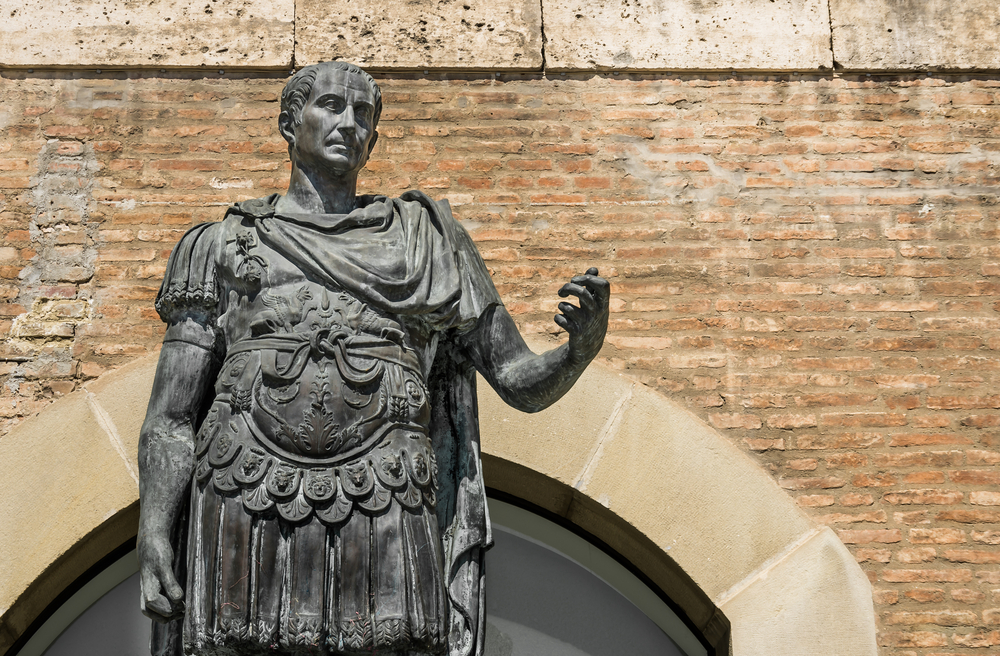
    Adamson also cites a play by Shakespeare in which Julius Caesar denies the power of the stars. (I.ii.134, as cited by Adamson)

    The fault, dear Brutus, is not in our stars 
    But in ourselves, that we are underlings.

    The Epistle of James 1:13
    Julius Caesar

    Summarizing the Logic in James 1: 13

    Adamson begins his summary by saying that “James…is in the midstream of apostolic doctrine...The Christian is God’s man, not the world’s; and so, as his loyal child, he is bound by God’s law”

    The Problem of Evil

    He mentions the philosophical problem of evil. (Philosophy deals with the question of why evil exists in a world created by a God who is all-good and all-powerful.) But James does not approach the problem from that angle. His approach is uniquely Christian. Adamson quotes John Coutts on this:

    James has no philosophical answer to the problem of evil…He cannot explain why people are pushed almost beyond endurance–but he offers a practical answer: faith in a God of pure goodness.3

    The Christian Answer to the Problem of Evil

    The assaults of evil are the result of lust, and lust is alien to God. (What James means by ‘evil’ is explained below.)There is a reward for the faithful who resist these assaults. Endurance in the face of assaults comes from sincerity of faith.

    He has given us Christians the “word of truth” with a view to our becoming a sort of “firstfruits.” Therefore, in accordance with that gift and purpose, we must live as in v. 19 (say, in a word, “peaceably”); for as Christian children of God we must by our conduct manifest God’s implanted gift (of “truth,” involving “righteousness,” v. 21), and that is not achieved by “wrath” (and its concomitants, as in 4:1-4).(p. 69)

    The Opposite of Amoral Philosophy

    It was stated above that Adamson thought James was contending with an amoral philosophy in verse 13. The opposite implications are clear in 1:19-21. “God’s attribute is unmixed good.”

    Terms: The Use of the Word “Tempt”

    Adamson says the use of the word “tempt” may perplex some readers, for example when the Israelites tempt God in the desert, or when God tempts Abraham.4 But God’s tempting is different from the devil’s, (or man’s). God does not desire the candidate to fail, but to succeed.

    Nevertheless, Adamson doesn’t think this innocent interpretation is the true meaning of “temptation” by God in the Lord’s Prayer. Furthermore, James uses it in its most sinister sense. He says it never comes from God, and yet believers should rejoice in it.5

    The following quote is from footnote 80 on page 69:

    Probably the best paraphrase, if not direct translation, of the petition in the Lord’s prayer is “Grant that we may not fail in the test” (cf. C. C. Torrey, The Four Gospels [1933], p. 292), with which may be compared our Lord’s admonition to the disciples in Gethsemane: “Keep awake, and pray not to fail in the test” (Mark 14:38a). The Jewish service for morning prayer contains the similar petition: “Do not bring us into the power of temptation; let not the evil inclination (yetser) have sway over us,” See C. F. D. Moule, “An Unsolved Problem in the Temptation-Clause in the Lord’s Prayer,” Reformed Theological Review 33(1974), pp, 65-75.

    What Does James Mean By “Evil?”

    James is not referring to God’s sorrow at men’s sin, God’s sorrow at His Son’s crucifixion, natural disasters, or disease. James is clearly referring to moral evil or sin.

    As for the construction of the phrase “invincible to assault of evils, “grammatici certaint on the classification of this genitive case: adjectives formed like this regularly negative the idea of the cognate verb.” Adamson provides the Greek phrase in the notes on page 70.

    The sentence in question in the above paragraph is “For God is invincible to assault of evils, and himself subjects no one to assault of evil.” The second half of the sentence denies that God ever instigates a man to sin, but both halves represent a single truth.

    If God were not invincible to evil he could not escape becoming at least sometimes the ally of sin; as it is, the invincible good is ipso facto incapable either of leading others or itself being led into sin (see Jas. 1:17; 3:10-12, on the argument from natural consistency).

    Conclusion: The Goodness of God

    This section ends with assurances about God’s goodness. The first quote is from Marcus Aurelius:

    The Reason (Logos) which rules the universe has no cause in itself for doing wrong. (Moffatt, p. 18)

    This second quote is from Mayor’s commentary on James6. (p.50)

    God is incapable of tempting others to evil, because He is Himself absolutely insusceptible to evil.”

    1. R. Hooker, There is no citation. ↩︎
    2. J. Moffatt, The General Epistles. Moffatt New Testament Commentary (1945). ↩︎
    3. John Coutts, The Soldier’s Armoury (Jan.-June 1976), p. 108) ↩︎
    4. R. A. Knox, A NT Commentary, 3 volumes (1995) ↩︎
    5. Cf. 1 Corinthians. 10:13, where indeed Paul may be deliberately supplying an interpretation of the clause “Lead us not into temptation.” ↩︎
    6. J. B. Mayor, The Epistle of St. James (1913). ↩︎

  • The Metaphor of Cain and Abel

    Shortly after I wrote The Coup is Complete, a helpful article was published on La Civiltà Cattolica entitled “Fraternity From Cain’s Perspective.”1 I think it’s obvious that the metaphor of Cain And Abel can help us understand the current political turmoil around the world. I would also argue that these two articles can be associated with Freemasonry. Neither article mentions Freemasonry but I will explain the connection.

    Freemasons and Tubal Cain

    Freemasons don’t openly honor Cain, but they do celebrate Tubal Cain as the first blacksmith. Tubal-Cain is not a murderer like Cain but the descendants of Cain are portrayed as being outside the worship of God. In Genesis 4:22, Tubal-Cain (spelled Tubalcain in the Bible) was a descendant of Lamech and Zillah. I believe he was seven generations from Cain.

    Tubal Cain is a master craftsman and a forefather of all skilled workers. He also symbolizes the dedication to craft and the development of tools. Last but not least, he represents the transmission of knowledge and the foundational skills that contribute to the betterment of society.

    Addressing Political Violence

    In the story of Cain and Abel as analyzed by Vincent Anselmo SJ there is an important difference between the Biblical story of Cain and the lesson the Freemasons take from it. As presented by Anselmo, the story of Cain and Abel may not be as dark as we think. However, according to some versions of Freemasonry it implies division.

    Freemasons don’t excuse Cain’s murder. They focus on Tubal-Cain’s skills and contributions and avoid talking about any perceived spiritual shortcomings connected to his lineage. But something positive is missing in their interpretation. No one mentions that Cain was no longer belligerent toward God by the end of the biblical story.

    Cain and Abel in the Bible

    In the Bible, Able is a shepherd and Cain is a farmer. The prominence given to Cain is an important part of the story.

    Cain is presented as the more important character not only because he is the first in order of birth, but also because of the kind of welcome he receives when he comes into the world. Eve greets the birth of her first son with a cry of exultation, as if in the presence of something prodigious.[4] The first man, born of woman, is introduced as an exceptional, almost divine being. The words pronounced by Eve can be translated with a shocking expression: “With the help of the Lord I have brought forth a man” (Gen 4:1). From Eve’s point of view, there seems to have been a  participation with  God in this exceptional birth. Abel, by contrast, is mentioned almost en passant, as the additional son. (Anselmo)

    Able’s Name Suggests ‘Breath and Vapor’

    The character of Abel is presented as barely solid. His very name suggests breath and vapor. The two brothers are not able to see one another as a brother. Instead, they see one another as a competitor and an adversary to be eliminated. Anselmo represents the clash between Cain and Abel as a clash of hierarchies and preferences.

    It is for this reason that it is surprising how the story of the first pair of brothers is presented from the point of view of the guilty one, that is, of Cain, who, by killing Abel, also eliminates the possibility of defining himself as a brother.[2] Moreover, in the biblical account  we do not see any justification of the murderer, as  for example, in the story of Romulus and Remus, but the serious responsibility of the murderer is highlighted in an authoritative way by God. (Anselmo)

    A Clash of Hierarchies

    I’m starting to think that our familiarity with the story causes us to overlook important information. We know how the story ends. Cain kills his brother Abel. Then he attempts to avoid God’s judgement. Cain’s efforts to evade responsibility for his brother’s death are futile and he is eventually banished from the and and from his parents.

    The trouble between them begins when they both present an offering to the Lord. We are told that the Lord looks with favor on Abel and his offering (Gen 4:3-5a). When the Lord reveals his preference it upsets the hierarchy between the brothers and Cain becomes angry. However, in Anselmo’s telling of the story God discerns Cain’s feelings and tries to intervene before Cain does something he will regret. God loves Cain.

    Eve’s firstborn is not left alone with himself to brood over his resentment and anger. God intervenes and speaks directly to Cain,[9] first of all through a double question that is an invitation to discuss the issue: “The Lord said to Cain, ‘Why are you angry? Why is your face downcast?’” (Gen 4:6).

    The Lord Loves Cain

    The Lord’s acknowledgement of Cain’s turmoil allows him to see his inner emotional state from an outside perspective. In this way, God invites Cain to reflect on what’s happening within himself.

     “If you do what is right, will you not be accepted? But if you do not do what is right, sin is crouching at your door; it desires to have you, but you must rule over it?” (Gen 4:7).

    The Lord’s intervention has no effect and Cain remains gruff and dismissive. However, he does express remorse later in the story. When he considers the sentence of being driven from his home and becoming a ‘restless wanderer on the earth’, he speaks to God sincerely and acknowledges his loss.

    “Cain said to the Lord, ‘My punishment is more than I can bear. Today you are driving me from the land, and I will be hidden from your presence; I will be a restless wanderer on the earth, and whoever finds me will kill me’.” (Gen 4:13-14).

    Cain Repents

    The Lord responds by putting a mark on Cain to protect him from the violence of strangers.

    “But whoever kills Cain will suffer a sevenfold vengeance!” (Gen 4:15). Faced with the drama of evil and the gravity of its consequences, the Lord confirms that God is the God of life. God’s word has the effect of stopping an intensification of evil and of restarting the path of history. The reader is informed that Cain receives from the Lord a sign to protect him (cf. Gen 4:15).

    Cain was not a reprobate in the end. He was a repentant soul.

    Cain and Abel: The Esoteric Offshoots.

    In my article I wrote that those who have taken control of our government (and their supporters) can still change their minds. I believed we could all be reconciled if they would just stop tearing things down and help us build. And this line of thought reminded me of Cain. I wasn’t likening them to Cain. I was thinking of the promise made to him by the Lord: “If you do what is right, will you not be accepted?”

    The Freemasons

    The Temple Legend of the Freemasons has been on my mind since the first time I read about it. The main thing that stayed with me is that the Freemasons identify with Cain’s lineage. And they consider the lineage of Cain superior to the other half of humanity.

    We have seen that the Old Testament’s picture of Cain almost encourages this view. As Anselmo said above, “The first man, born of woman, is introduced as an exceptional, almost divine being.” This establishes the sense of a hierarchy. However if it’s true that Cain accepted his guilt and repented, a lingering sense of competition and superiority has no parallel in the biblical story.

    The Legend of Hiram Abiff

    The original Temple Legend is quite old. It has been embellished over the years, but the key figure has always been Hiram Abiff. He was the master architect sent by Hiram, King of Tyre to help Solomon build the temple at Jerusalem. Hiram Abiff embodies the ideal of knowledge, integrity, and perseverance within the legend and serves as a pivotal figure in the Masonic Third Degree ritual. But this legend also has complications.

    Construction of the temple lasted for years and members of the craft were frustrated by the lengthy process and the time required to advance in their titles and expertise. Three of them demanded that Hiram Abiff immediately give them the knowledge of a Master Mason. When Hiram refused, they killed him. Although they tried to hide his body, it was eventually found and they were brought to justice.

    The Metaphor of Cain and Abel

    In Freemasonry, the Temple Legend is seen as an instructive legend about the past and future of human evolution. It’s not hard to argue that this view pits the Freemasons and the Church against each other. According to some tellings, a person either belongs to one group or the other from birth.

    The situation is described differently by the Catholic church. We have evidence of the division in letters exchanged by Pope Leo the XIII and the Grand Orient of Charleston in the State of South Carolina.

    Humanum Genus

    In April 1884, Pope Leo XIII wrote Humanum Genus2 as a warning to the human race. He said it had departed from God and divided itself into two different and opposing parties, one of which assiduously combats for truth and virtue, and the other for those things which are opposed to virtue and to truth. One is the kingdom of God on earth, (the Church of Jesus Christ) and the other is the kingdom of Satan. (De iv. Dei, lib. xiv., chap. 17.)

    The Grand Orient’s Reply

    Albert Pike answered in behalf of The Grand Orient in August 1884. He began by claiming that The Ancient and Accepted Scottish Rite of Freemasonry had accepted the Apostolate of Civil and Religious Liberty more than a century ago. They had not been in a hurry to answer ‘the Bull of Excommunication’ because the letter itself is proof that there is no reason to fear it. Pike claimed the controversy only existed because it was forced by the Church of Rome, its Jesuit soldiery, and its Tribunals of the Holy Office. (The Inquisition is used over and over to reinforce various arguments.) But now, he says, these things have no power because the Church has lost its temporal and spiritual power.

    Apparently, English, German and French Masonry had answered the Pope’s encyclical by denying any claim to religious or political principles. Pike regretted this. In his opinion, they had undergone a fruitless humiliation. Therefore, he felt it was the right of the Ancient and Accepted Scottish Freemasonry to ‘carry the war into the quarters of error...’

    Pike Calls Christians Apostatates

    Later in this letter he actually says that the Roman Church is “the Kingdom of Satan,” and calls the encyclical a manifesto against every other church calling itself “Christian.” (In other words, he claims all of Protestantism in Freemasonry’s apostolate.)

    Therefore, whatsoever the Popes, our Predecessors, have decreed to hinder the designs and attemps of the Sect of Freemasons; whatsoever they have ordained to deter or recall persons from Societies of this kind, each and all we do ratify and confirm by our apostolic authority. 3 (Grant p. 284)

    The letter was signed THE GRAND COMMANDER, Albert Pike, 33°.

    The Hubris of Freemasonry has Become Ironic

    Here is one more quote from Albert Pike lamenting the Church’s lack of tolerance. I include it because it’s so ironic.

    It was believed that the Pope looked with at least tolerant and indulgent eyes upon the people of the great Protestant Kingdoms and Countries, upon the Clergy and Laity of other denominations of Christians, upon, even such Hebrews as Sir Moses Montefiore; felt that the Turk, the Moor, the Parsee or the Hebrew was entitled to somewhat more merciful consideration and greater immunity from torture and mutilation than the dog, the wolf or the hyaena; and no longer considered it to be contrary to the law of God for men to insist upon imposing constitutional restrictions upon Autocracies and Despotisms, and for the People to demand to have a voice in the making of laws.

    Pike includes in this letter the names of previous Popes who had written papal bulls against Freemasonry: In Eminenti of Clement XII. inApril, 1738; Providas of Benedict XIV. in May, 1751; the Edict of Pius VII. in 1821; the Apostolic Edict Quo Graviora of Leo XII. in 1825; Pius VII. in 1829; Gregory XVI. in 1832; and Pius IX. in 1846, 1865, etc. So, the battle lines were drawn long before the more esoteric versions of this myth were developed.

    Rudolf Steiner’s Anthroposophy and the Temple Legend

    In Rudolf Steiner’s book, The New Cain,4 we learn that the Temple Legend was introduced into the cultural life of central Europe by Christian Rosenkreutz. (p. 9) At first it was intended as teaching material for small groups of students. It was an aid for instruction about the past and future of human evolution. Later it became the core of different types of masonic rituals.

    Rudolf Steiner reconstructed his own Temple Legend from his own ‘independent spiritual research’. It can be seen as an ‘occult-imaginative means to school and develop the soul’s spiritual capacities’.

    Cain and Abel: the Primal Opposition in Humanity’s Evolution

    The division of the human race into two types is made clear in this version. Steiner calls it ‘a primal opposition in humanity’s evolution. His book seems to say that the original Temple Legend had already described humanity’s dual origin. But here he makes clear that humans are either the children of Cain or the children of Abel. (I believe this is where anthroposophy branches off from Freemasonry.)

    The Influence of Theosophy

    According to Steiner, the children of Cain emerged from asexual procreation and the children of Abel emerged from dual-gender procreation. Steiner tells us that the sons of Cain belong to the pre-Lemurian period, and the sons of Abel, or Seth, belong to Lemurian times. (Again, I could be mistaken but I think this concept comes from Helena Blavatsky’s Theosophy. In any case, there doesn’t seem to be a distinction between Abel and Seth.)

    The aim of theosophy was to reconcile this opposition. Today the anthroposophic world impulse and a freemasonry renewed through anthroposophy have taken up the challenge.

    Is Reconciliation Really the Goal?

    In my opinion, the word reconcile may be misleading. We are told that the initiation developed by Steiner will eventually replace the vision of the sons of Abel-Seth. This line will fade away, or at least the vision of this line. However there doesn’t seem to have been much fading since this book was written. Fading away would be preferable to what’s actually been happening.

    ..The brazen or molten sea can stand as a symbol of what the human being would have become if the three treacherous powers of doubt, superstition and the illusion of a personal self had not come to occupy the soul. Through these powers, human evolution on earth developed the fire in Lemurian times that water processes cannot quench in the Atlantean period. Instead human earthly powers must evolve in such a way that the original condition present in Cain before the fratricide is at last recreated in the soul. Only the descendants of Cain, coming to full and real I development, can sustain themselves in the face of earthly forces. The dreamlike soul powers of the children of Abel-Seth are not able to do so.

    1. Anselmo, Vincent, SJ. “Fraternity From Cain’s Perspective.” La Civiltà Cattolica, Jan. 4, 2023, https://www.laciviltacattolica.com/fraternity-from-cains-perspective/ ↩︎
    2. Leo XIII, “Humanum Genus.” The Holy See, 20 Apr. 1884, https://www.vatican.va/content/leo-xiii/en/encyclicals/documents/hf_l-xiii_enc_18840420_humanum-genus.html ↩︎
    3. M. R. Grant, True Principles of Freemasonry: A Treatise on the History, Principles or Tenets of Freemasonry, For The Information of Those Who Are “Within the Veil,” As Well As Those Who Are Without. Truth Publishing Company, Mississippi city, Miss. 1927. ↩︎
    4. Rudolf Steiner, The New Cain: The Temple Legend as a spiritual and moral impuse for evolution and its completion. Temple House Publishing Ltd., Hillside House, The Square, Forest Row, RH18 5ES. ↩︎

  • James 1:12

    This entry is part 7 of 11 in the series The Epistle of James

    Site Icon

    The last section of Adamson’s commentary on James Chapter 1 covers James 1:12 to James 1:27. However, he takes a break after James 1:12. He labels the next section 13-27 and briefly discusses verse 13 in particular. Due to this organization, I decided to limit this article to James 1:12. Adamson’s translation is as follows:

    Happy is the man who with constancy endures trying assaults of evil; for when (upon trial) he has been approved, he will receive the crown of life, which God has promised to those who love him.

    Endurance

    This section begins by saying that the idea of endurance is familiar in Judaism. Adamson cites two of the sources from the select bibliography (p. 40) who find tribal references to Jacob and Issachar (A. Meyer1, pp. 270ff. and B. S. Easton2, p. 26). But the idea of endurance is also typical of James.

    Happy is the man who here and now, from day to day, withstands peirasmos: he is progressing toward salvation (as in 1:3), and if (as 1:4 requires) he endures to the end, then at last, winning final approval, he will receive the final reward, the crown of life. (Adamson p. 67)

    (Adamson prefers the word happy (beatus) in this context to blessed (benedictus).

    Peirasmos

    Regarding the meaning or sense of the word peirasmos, Adamson agrees with Ropes3 (p. 150) who says the phrase ‘has been approved” is another way of saying endures, and not a further condition of receiving the crown. The word contains the notion of a trial, but also trial and approval (1Corinthians 10:18; 13:7; 2 Timothy 2:15).

    The Crown of Life

    The next paragraph discusses ‘the crown of life’. Adamson tells us that the victor’s prize in the Greek games (the crown, head-wreath, chaplet, or circlet) was worn in religious and secular feasts. It was given and received as a public sign of honor. But in the Bible there is a difference. Paul makes a distinction between this crown and the crown the Christian is hoping to win.

    The Greek Games Compared to Christianity

    In Corintians 9:24, 25, he reminds us that in the races only one competitor received the prize. In Christianity, however, the Christian is not competing against his fellow athletes. Adamson compares it to a scholastic examination. In other words, there is no reason why all candidates should not pass the test.

    But still, this image was relevant. The clue is in Hebrews 12:1, which describes the crowd of spectator-witnesses, the past heroes of the faith, and the stripping off of encumbrances, like clothing (see James 1:21).

    …it is the race of endurance; and the model of endurance, and the founder and perfecter of the faith which by endurance we must maintain, is Jesus. Whereas the athletes have human competitors, the Christian’s adversaries are the powers of darkness, trying to drive him out of the course and prevent his ever finishing it. (Adamson, p. 68)

    But perhaps the metaphor of the fight would have been a closer parallel to the biblical contest. Here, Adamson quotes R. Simeon b. Lakish4:

    It can be compared to two prize-fighters, one of whom was stronger than the other. The stronger prevailed over the weaker and then placed a garland over his own head.

    James Differs from Paul in this Regard

    But James is not like Paul in this regard. He does not pursue the metaphor of athletic competitions. The crown is the reward of the Christian’s effort but this effort is a struggle against evil rather than fellow competitors. And eternal life is the crown.

    Conclusion

    Some later manuscripts specifically mention ‘the Lord’ or ‘God’ as giver of this promise to those who love him. However, the promise does not appear in so many words in the Old Testament. Adamson concludes this section by listing related New Testament verses which he thinks provide evidence of an otherwise unrecorded saying of Jesus.5 These are 1 Corinthians 9:25; 1 Peter 5:4; 2 Timothy 4:8, and especially Revelations 2:10.

    Finally, he argues that the ‘strong liturgical flavor’ of James 1:12 is another confirmation.

    Dibelius Shows (p. 87) that the words ‘those who love him’, common enough in the LXX and later Jewish and Christian tradition, are traced back by the Rabbis to Judges 5:31.6 Man’s duty of love to God is as old as any in Hebrew religion, and from Ezekiel onward the prophets take up the theme with renewed emphasis, in which they are followed by Jesus and, after his example, by James and Paul.

    See Also: Religion Must Guide the Political Moment
    1. A. Meyer, Das Ratsel des Jakobusbriefes (1930). ↩︎
    2. B. S. Easton, The Epistle of James. Interpreter’s Bible (1957). ↩︎
    3. J. H. Ropes, The Epistle of St. James, ICC (1916). ↩︎
    4. Exod. R. xxi. 11. ↩︎
    5. A. Resch, Agrapha (1906), p. 253. ↩︎
    6. M. Dibelius and H. Greeven, The Epistle of James, E.T. (1975). ↩︎

  • The Right is Passing Judgment on the Left

    This video published just a few hours ago indicates that the Right is doubling down on the claim that Kirk was shot by Tyler Robinson. Turning Point USA has issued a statement saying there was no exit wound in Kirk’s neck after he was shot with a .30-06 caliber bullet. Apparently, the bullet was stopped by his strong neck bones because he is a man of steel. This has unpleasant implications. It implies that the propaganda surrounding this assassination is going to be maintained. Because the alleged assassin has been identified as a member of the Left, the Right is passing judgment on the Left.

    The Accusations Are Not Going Away

    I regret to tell you, reader, what this means. It means outrageousness, and not truth, is the point. And because of its similarities with the JFK assassination, I think we have to assume outrageousness was the point there too. Whoever did this to Charlie Kirk is saying they can do whatever they want and no one can stop them. And when the authorities publicly ignore evidence in the public domain, they seem to be saying it’s all a joke. In my opinion, there is no response from the Left that will make this go away.

    Taking Refuge in the Epistle of James

    In this article, I’m taking the opportunity to share what James the Just says about judging one’s neighbor. I have been writing a series on the Epistle of James on my other website, but I’ve only got as far as James 1:11. I’m writing this here because I think these verses are particularly relevant in this context. The verses I would like to share are James 4:11-12. Please pay close attention to the conclusion in the commentary by James B. Adamson. I think it’s the best response to the Right’s accusations.

    James 4:11-12

    11.  Do not speak ill of one another, brothers. He that speaks ill of his brother and passes judgment on his brother is speaking ill of the law and passing judgment on the law; but if you pass judgment on the law, you are not a servant of the law but a judge of it.
    12. There is one dispenser of law and judge, he who has power of life and death. And who are you, that you pass judgment on your fellow? (Translation by Adamson, p. 175-6)

    Previously in this chapter, James has focused on the temptations of the tongue. “Who are you to judge another?” He has made it clear that the failure to control the tongue is a form of self-righteous pride.

    The Word Brother

    11. The word brother is repeated three times in verse 11. Some have argued that James is talking to hypercritical Christians, anti-Pauline Christians, or Gnostic teachers. Adamson disagrees. He believes this signals a change of tone and a fresh appeal. This verse refers to all who submit to the world, and especially the proud (4:10). It is a warning. It is also an echo of James’s previous verses, 1:26; 2:12, 13; and 3:10. (Please hover your cursor over the verses if you want to read them.)

    Evil Speaking Kills Three Persons

    The Old Testament denounces evil speaking more often than any other offense, both against God (Numbers 21:5) and man (Psalms 49:20). Slander was called the third tongue because it killed three persons: the speaker, the spoken to, and the spoken of. It has been said there is no salvation for anyone who slanders his neighbor.1 Here Adamson compares James’s view of the seriousness of slander to what Christ said in Matthew 7:1. James equates slander of a fellow Christian with breaking the Christian Torah2, because the interests of both are the same.

    Hillel said, “Judge not your neighbor before you find yourself in the same situation.3

    The Difference Between Judging and Doing the Law

    The difference between judging and doing the law is carefully explained. Man must obey the law, not judge it. To set oneself above the law is to usurp the divine prerogative. In fact, the Rabbis taught that judging our neighbor leads to the graver sin of judging God. Respect for law and order is necessary for the health of modern society, but James reminds us that God is the source of all law. So, what is at stake in a ‘permissive society’ is respect for the authority of God himself. (From the context of this commentary, I think he means a society that permits Christians to judge one another.)

    James 4:12 is the Most Important Point in the Entire Section

    Adamson thinks the next verse, James 4:12, is the most important point in the entire section. The section in question is James 4:4 to 5:8. For ease of reading I’l repeat James 4:12 here.

    There is one dispenser of law and judge, he who has power of life and death.
    And who are you, that you pass judgment on your fellow?

    (Adamson believes Matthew 10:5-42 makes the same point, especially verses 15, 22, and 28.)

    James’s Personification of the Law

    12. James personifies the law and he seems to identify it as the brother. In his view, “any slander or judgment of a brother implies not only an active disregard of Torah but also an attitude of superiority reserved solely for God, who is the omnipotent Lawgiver and Judge.

    This is a characteristic Jewish monotheistic doctrine of God’s supreme sovereignty. Rabbi Ishmael spoke on God as the final source of judicial authority: “Judge not alone; for there is none save One that judgeth alone.” Adamson also quotes Dibelius: “Truly, the Eternal destroys life and sustains.” and “One he casts down and the other he raises up….”

    Adamson’s Conclusion: Salvation (or its Opposite) at the Last Judgement

    Adamson believes James is referring to ‘salvation’ or its opposite at the Last Judgement (5:9).

    The point is clinched with a devastating question. The disjunctive pronoun is sarcastic, emphasizing the sheer folly of the world to judge, while the vigorous proleptic ‘you‘ serves to widen the gulf between God’s judgment and man’s. ‘And who are you that pass judgment on another?’ To which John Wesley replies: ‘A poor, weak, dying worm.’ For James, as for us, however, the best answer is scornful silence. (Adamson, p. 178)

    1. Derek Erets Zuta 1: Midr. R. Deut. vi. 9; Cohen, Everyman’s Talmud, p. 99; SB 1, pp. 226ff., 905. ↩︎
    2. On this as Jewish Torah, see Oesterley, Knowling. ↩︎
    3. Aboth ii. 4; see b. Shab. 127a; Matt. 7:1f.; John 12:31. ↩︎
  • Charlie Kirk and Tyler Robinson

    Charlie Kirk and Tyler Robinson are two young men who were sucked in to someone else’s nightmare. Charlie’s nightmare is over; Tyler’s nightmare is still very much in charge of his world. As I write, the same nightmare lords it over the the rest of us. We are all helpless spectators. But my hope is that we are not entirely helpless. This is important because Kirk’s death has been weaponized against the Left.

    Problems With the Official Story

    Many convincing videos have called into question the weapon that killed Charlie Kirk. I’ve linked two of the videos below and I hope you will watch them. However, I don’t want to focus on the videos. (I deleted one of the videos. I appreciated the work he did on the ballistics, but his other content is unpredictable. I’m sure we can all handle these ideas when necessary, but if I can’t guarantee his content I can’t leave his link on my website. If you want to learn about the Tyler Robinson saga there will be plenty of updates on your favorite platform. Who knows, maybe this guy will mellow out with time.)

    I want to focus on a few parallels with the assassination of John F. Kennedy. The first parallel is the overall messiness of the scenario as presented to the public. No one has bothered to clear up the official story.

    Bolt-Action Rifles

    The police found Tyler Robinson’s rifle in the woods wrapped in a towel. Sheriff Eugene Boone found Lee Harvey Oswald’s rifle in an upper room of the Texas School Book Depository. They were both older model bolt-action rifles.

    In Robinson’s case, they say he disassembled the rifle in order to climb off the roof, and then he reassembled it before leaving it in the woods. But the videos that show him climbing off the building don’t indicate that he had the rifle at that time.

    Oswald told reporters he was a patsy.

    Ballistics

    People who know about guns say that the report of this shot did not sound like the rifle that Tyler Robinson supposedly used. And that’s not the only problem. Judging by the sound of it, the gun that killed Charlie Kirk was not far from the camera that recorded his death. If the shot had come from the building on the other side of the grounds, as law enforcement personnel claim, it would have had a different sound. And then there is the wound in the front of Charlie’s neck. It appears to be an exit wound, based on the size of it and the amount of blood. Therefore, it seems likely that the shot came from behind him and to his right. That would make more sense. He fell to his left.

    The direction of the shots that rained down on the Kennedys were not consistent with the story the authorities provided. They said JFK was hit in the back of the head. That’s the only thing that would have been consistent with their story that Oswald was firing out of a window above and behind the Kennedys’ car. But the bullet that killed JFK actually exited from the back of his head. Those who saw his body afterward said he had an exit wound there. Strangely, it was no longer there when his body arrived back in Washington D.C.

    Please Don’t Repeat the Assassination of the Accused Killer

    The parallel I am most worried about has not happened yet. It’s the main reason I’m writing this article. Jack Ruby shot and killed Lee Harvey Oswald at close range before Oswald could be tried. This took place in the basement of a police station. Oswald’s guilt is now a permanent part of the official story.

    I hope this article will dissuade anyone who might be thinking of doing the same to Tyler Robinson.

    See the following video:

    Israeli News Live: Sound Signature Pinpoints Charlie Kirk’s Shooter’s Location

  • Right-Wing Violence

    I was going to summarize an article on the history of right-wing violence. I actually spent quite a lot of time on it, but I decided that I don’t want to include all of the information. As bad as things are now, they have been worse in the recent past. I believe the right will find new ways in it to torture people.

    All I really wanted to do was show the Left how closely the administration is following the right-wing playbook on taking power. People on the Left suffer when the Right accuses us of assassinations, or of celebrating when someone on the right dies. But there’s no need to take it personally. They don’t really think we are responsible. They just want to get people riled up. They may be responsible for the deaths themselves.

    How Do We Know if Violence is From the Right?

    Movements can be identified as right wing when they accept human inequalities and when they act as if violence is a legitimate way to defend hierarchies. Right-wing violence is violence that supports right-wing goals.

    Right-wing violence generally has two targets: the primary target is an ‘inferior community’; the secondary target is the government.

    Why Does Right-wing Violence Happen?

    Right-wing violence goes hand-in-hand with democratic mass politics. The problem from the Right’s point of view is that public opinion becomes more important when the public can vote. And mass communication influences public opinion with information about the government and the candidates. So, wherever there are mass publics there will be radical movements around the edges trying to drag public opinion in their direction.

    The United States

    In the American north, industrialists have always been able to hire private bodies to keep workers in line. Organizations like the Pinkertons and the National Guard have acted like their private militia. The system in the Deep South has been even more brutal. After the Civil War, the Ku Klux Klan terrorized the black population until they had built a new caste system. This system lasted for another hundred years.

    World War I

    After World War I there were waves of violence across Europe. Elites used both high and low roads to take power. The violence was either elitist or mass-action. High roads involved coups, assassination, and strategies of tension. A strategy of tension is an attempt to ride chaos to power.

    The low route to power is the conquest of the streets or mass mobilization. Bombing (or shooting) attacks might continue under this strategy.

    Conclusion

    There’s more. Much more. And believe it or not, it only gets worse from here. The main point is that we are in the world of rightist tactics. Lies and accusations of the Left are not meant to be true or accurate. They are meant to stir people up.

    Wilson, Tim. Rightist Violence: An Historical Perspective. International Centre for Counter-Terrorism, 2020. JSTOR, http://www.jstor.org/stable/resrep23578. Accessed 15 Sept. 2025.
  • James 1:9-11

    This entry is part 6 of 11 in the series The Epistle of James

    c. As comforting the lowly poor and chastening the haughty rich (James 1:9-11)

    9 (in the equality of Christian brotherhood) let the brother  
    of humble degree exult in his being made high,
    10 and the rich (brother) in his being made low: for he
    (in his being-only-rich) shall pass away like the flower
    among the grass.
    11. For the sun arises, with the scorching wind, and parches
    the grass, and the flower among it falls off, and the
    beauty of its appearance perishes: so he who is (only)
    rich shall wither in his ways (Translation: Adamson p. 61)

    Adamson begins by focusing on James’s intended meaning of the terms. His analysis is based on the Greek language version, and both New Testament and Old Testament verses.

    Brother

    Concerning verse 9, Adamson says the wording in Greek is significant for understanding who is meant by the word, ‘brother’. He argues that we must read ‘brother’ with the rich (v. 10) as well as with the lowly (of humble degree). This is contrary to another view which assumes that the phrase the rich refers to the non-Christian man in general. Adamson agrees with the argument provided by Ropes.

    My Approach to Adamson’s Bibliography

    Ropes is one of the entries in Adamson’s ‘select bibliography’, which begins on page 40. Adamson sometimes disagrees with the authors on this list. Or he agrees with them and uses their works to illustrate his own view. In the discussion of ‘brother’ he depends completely on Ropes’s argument that ‘brother’ does not refer to the non-Christian man in general. So, I included the citation. If the reader is not comfortable with this approach, please compare my summary against Adamson’s book.

    Ropes’s Rebuttal of the View that ‘Brother’ means the Non-Christian Man 1

    • The refusal to supply ‘brother’ is unnatural.
    • The addition of ‘let him exult’ would require excessive irony.
    • [‘Brother’ has a] loose connection with the context and especially with the initial and continuing idea of peirasmoi.

    Exalted

    For ease of reading, I’ll repeat Adamson’s translation of verse 9: ‘let the brother of humble degree exult in his being made high‘. In this section, Adamson lists several verses to demonstrate the use of the verb exult.

    The Old Testament

    In the Old Testament, the verb ‘exult’ is used for any ‘proud and exulting joy’. (Hover or click on the citation to read the verse. The verses are not visible on mobile view. I’m trying to fix it.).

    • Psalms 5:11
    • Psalms 32:11
    • Jeremiah 9:23
    • Ben Sira 39:8

    The New Testament

    The verb is used frequently in the New Testament, especially by Paul who uses it more than thirty times.

    • 2 Corinthians 7:14
    • Romans 5:3
    • 2 Corinthians 12:9
    • 2 Corinthians 11:12 (Ropes p. 145)

    According to Adamson, the way the verb is used here harks back to the exhortation to joy of James 1:2 and it stresses the opposition to double-mindedness. The moral quality of this joy depends on the occasion.

    To exult is bad in James 4:16. Adamson offers the following verses for comparison, and leaves it to the reader to decide if these verses support his view that they refer to the moral quality of exulting joy:

    • Romans 2:17
    • Romans 2:23
    • Romans 3:27
    • Romans 4:2
    • 1 Corinthians 1:29
    • 1 Corinthians 4:7
    • 2 Corinthians 11:18
    • Galations 6:13
    • 1 Corinthians 5:6

    In the following verses the exulting is good:

    • Romans 5:2
    • Romans 5:11
    • Philippians 3:3
    • Romans 15:17
    • 1 Corinthians 1:31

    ‘Lowly’ as Referring to the Outward Social Status

    Adamson argues that when James used ‘lowly’ he did not have in mind the Christian grace of humility. That would be to ‘spiritualize’ the word. He was referring to outward social status, like the status of a slave or a beggar. In other words, ‘poverty in relation to glorying and contempt, a state despised by the mass of mankind’ (Hort)2.

    Here Adamson refers us to Luke 1:52 and Romans 12:16.

    • Luke 1:52
    • Romans 12:16

    The Greek word means ‘low’. This is not a virtue in mind or status, as in classical thought, but rather it is like our ‘poor-spirited’. In the LXX (the Septuagint), the word may mean literally ‘poor’ (1 Samuel 18:23).

    Lowly can also have a religious connotation

    But it sometimes has a special religious connotation when contrasted with the ‘rich’:

    • Psalms 10:2
    • Psalms of Solomon 2:35 (a collection of ancient Jewish religious poems)

    James also used ‘lowly’ in an inward spiritual way (4:6). The two uses were sometimes associated in Jewish literature (Ben Sira 10:30f).

    Among Christians, humility is the virtue of voluntary acceptance or confession of a low or subordinate status in esteem or function; (compare) Phil. 2:1-13, the locus classicus on Christian, and Christ’s, humility.

    Even under Christianity, the metaphor implicit in the word ‘humility’ is not very pleasing in an equalitarian age. In Jas. 1:9 the meaning is literal, referring to a man’s mean social station in life. ‘Highness’, ‘exaltation’, refers to the present spiritual status which, by virtue of his relation to Christ, the Christian now enjoys. (Adamson p. 62)

    Philippians 2:1-13
    2:1 If there is any solace in love, any participation in the Spirit, any compassion and mercy,

    2:2 complete my joy by being of the same mind, with the same love, united in heart, thinking of one thing.

    2:3 Do nothing out of selfishness or our of vainglory; rather, humbly regard others as more important than yourselves,

    2:4 each looking out for his own interests, but (also) everyone for those of others.

    2:5 Have among yourselves the same attitude that is also yours in Christ Jesus.

    2:6-11
    6 Who, though he was in the form of God,
    did not regard equality with God
    something to be grasped.
    7 Rather, he emptied himself,
    taking the form of a slave,
    coming in human likeness;
    and found human in appearance,
    8 he humbled himself,
    becoming obedient to death,
    even death on a cross.
    9 Because of this, God greatly exalted him
    and bestowed on him the name
    that is above every name,
    10 that at the name of Jesus
    every knee should bend,
    of those in heaven and on earth
    and under the earth,
    11 and every tongue confess that
    Jesus Christ is Lord,
    to the glory of God the Father.
    2:12  So then, my beloved, obedient as you have always been, not only when I am present but all the more now when I am absent, work out your salvation with fear and trembling. 
    2:13  For God is the one who, for his good purpose, works in you both to desire and to work. (The Catholic Bible NABRE)

    Abasement

    In verse 10, Adamson focuses on the word ‘abasement’. Here it means self-abasement. This refers to a new mind of humility which Christians adopt. James urges this adoption on some of the brothers in 4:10, 13-16.

    The Flowers of Palestine

    Adamson likens James to Peter in his use of Isaiah 40:6,7. Its theme: ‘all flesh is grass’. He translates it as ‘the flower among the grass’ and emphasizes that flowers are profuse in Palestine. He names anemone, cyclamen, and lily.

    James 1:9-11
    Cyclamen Credit: Gideon Pisanty (Gidip)

    Adamson also cites Matthew 6:28, 30. In my opinion, it is painful to read these verses with present-day Palestine in mind:

    28  Why are you anxious about clothes? Learn from the way the wild flowers grow. They do not work or spin.

    30 If God so clothes the grass of the field, which grows today and is thrown into the oven tomorrow, will he not much more provide for you, O you of little faith?

    It is also painful to read Hort’s description of the flowers of Palestine:

    By ‘the flower of the field’ the prophet doubtless meant the blaze of gorgeous blossoms which accompanies the first shooting of the grass in spring, alike in the Holy Land and on the Babylonian plain (Hort p. 15).

    According to Adamson, in the Mediterranean region the spring is brilliant but very brief. The flowers only live for a short time every year. H. B. Tristram is quoted next:

    Al Najah University, Palestine Credit: CC by 2.0

    The downs of Bethlehem in February are one spangled carpet of brilliant flowers…In May all traces of verdure are gone.

    The Flower and its Implications for the Rich

    In verse 11, the implications for the rich are described poetically by means of ‘the flower’. Adamson’s focus in this section is the intricacies of the Greek words. For example, he informs us that the Greek ‘aorist‘ is used here.

    Needless to say, aorist has a complex meaning, not to mention the various words chosen by the other scholar’s listed in his bibliography. Much of this section explains the translations that Adamson rejects and his reasons for his own choices. In my opinion, including every word of this part of the text would be fruitless for those of us who don’t read Greek. Normally my main interest is in making his conclusions as clear as possible for all readers. However, the importance he gives this verse demands attention–his commentary takes up three pages. In this case, I summarize it as accurately as I can.

    Regarding the word aorist, Adamson thinks it may represent the Hebrew perfect in order to emphasize the suddenness and completeness of the withering. Here is a reminder of what the verse says:

     11 For the sun arises, with the scorching wind, and parches
    the grass, and the flower among it falls off, and the
    beauty of its appearance perishes: so he who is (only)
    rich shall wither in his ways.

    The Scorching Wind

    Rather than using obscure tribal references as some do, or the comparison of Christ to the rising of the sun, Adamson chose ‘scorching wind’. He thinks it is a better description of the vividness of the country life.

    No one who has ever lived in Palestine can forget the sirocco (sharqiya)–the blasting, scorching southeast wind which blows there in the spring; once begun it blows incessantly night and day. (Adamson p. 63)

    He also highlights a comment by E. F. F. Bishop.3

    The temperature hardly seems to vary. Flowers and herbage wilt and fade, lasting as long as ‘morning glory’. Anemones and cyclamen, carpeting the hillsides of Galilee in spring, have a loveliness that belongs only to the past, when the hot wind comes. Drooping flowers make fuel. The fields of lupins are here today and gone tomorrow.

    Adamson was certain that James must have seen the flowers that bloom on the Galilean hills as they wilt in the scorching wind.

    Appearance

    The word ‘appearance’ also rates its own examination. Adamson prefers the ‘easier’ meaning of appearance or show, and he illustrates its use with verses from the Old Testament. He credits Ropes for these references.

    • Genesis 2:6
    • 2 Samuel 14:20
    • Job 41:13

    Beauty

    As for the word beauty, Adamson prefers Ropes’s ‘goodly appearance’. He doesn’t think it should be allegorized too far. He says that we don’t think of the ‘pride’ of flowers, but of their short-lived beauty. The point is mainly that they perish. That’s why grass is often included in such Old Testament comparisons. And when we speak of the glory of flowers, or the sunrise or sunset, it is not the glory of pomp and pride as in plutocrats.

    The Withering of the Unbelieving Rich

    These verses are describing the fate of the unbelieving rich. Their withering is a simile.

    The picture of the rich ‘withering’ continues the simile of the fading flower: the verb, found only in the NT, is picturesque and may be used of the dying out of a fire.4 (Adamson p. 64)

    The verb is also used for many kinds of gradual enfeeblement (Wisdom 2:8)

    It is found in Philo, in connection with wealth5, and in 2 Talmud.

    The children of man are like the grasses of the field, some blossom and some fade.6

    Ways

    Adamson’s choice of the translation of ‘way’ is summed up in his view of James as an artist. This refers to the way James organizes his composition.

    Which passes away, the rich man or his riches?

    Hort poses this question, and he answers it by saying that the point is in the separation of a man from his wealth at death. Then follows a discussion of the state of the dead in Hebrew thought, and the problem of wealth without righteousness. Adamson concludes that the common fact of mortality has a special lesson for the rich, because they have a special temptation to forget it. He quotes Pindar:

    If any man who has riches excels others in beauty of form and has proved his strength by victory in the Games, let him remember that he puts his raiment on mortal limbs and in the end of all is clad with earth.7

    If any man fosters his wealth with honesty, abounding in possessions and winning good fame, let him not seek to be a god.8

    Conclusion

    Yet Hort perceives the truth. James indeed, as Hort says, has in view ‘not death absolutely but death as separating riches from their possessor and showing them to have no essential connection with him’. The pride of wealth ‘substituted another God for Jehovah and denied the brotherhood of man’. Speaking of his friend, a poor Christian, a wealthy unbeliever remarked: ‘When I die, I shall leave my riches. When he dies he will go to his’.9 In effect, this is what James is saying: Remember you are mortal and wealth per se does nothing for your soul: so be glad that by humbling yourself in Christ and the brotherhood you are likely to win the treasure of life everlasting. The old Hebrew thought of the premature end of the wicked and rich appears in James’s statement of his principle, which in fact is equally valid if the the man lives in wealth to the age of a hundred; besides, James is convinced that the end is at hand (see James 5:3, 8) (Adamson p. 66).

    1. J. H. Ropes, The Epistle of St. James. ICC (1916). ↩︎
    2. F. J. A. Hort, The Epistle of St. James, i. 1-iv. 7 (1909) ↩︎
    3. E. F. F. Bishop, Apostles of Palestine (1958). ↩︎
    4. Aristotle De Vita et Morte 5. ↩︎
    5. Special Laws i. 311 ↩︎
    6. b. Erubin 54a; Sir. 14:11-19. ↩︎
    7. Nem. xi. 13-16. ↩︎
    8. Ol. v. 23f ↩︎
    9. See J. Blanchard, Not Hearers Only 1 (1971), p. 68. Cf. K. Menninger, Whatever Became of sin?, on ‘the sin of affluence’ (pp. 149ff). ↩︎

error: Content is protected !!