When Recep Tayyip Erdogan defends Gaza , he is one of the few leaders in the Middle East to openly criticize Benjamin Netanyahu for his callous bombing campaign. In addition to providing hope for Gaza in her ongoing trial, Erdogan also reminds us that the Levant has seen better times. Palestine was under Turkish rule for four hundred years prior to the days of the British Mandate of Palestine. Apparently, Erdogan has not forgotten this long-lost child of the Ottoman Empire. On November 29, after Netanyahu continued to spew his vile threats at Gaza, Erdogan called Netanyahu the ‘butcher of Gaza‘.
During his time as president of Turkey, Erdogan has helped the Palestinians in many ways. His most important effort is probably his humanitarian relief to Gaza. This relief has been desperately important during Israel’s continuing blockade of food, water, medicine and electricity. Without his help and the help of the United Nations, the population of Gaza would have starved to death long ago. But shockingly, Netanyahu’s blockade remains in place even during his bombing spree. Erdogan’s courage is all the more admirable because his criticism may have cost him politically and monetarily. He is tied up, with the rest of the world, by the manipulations of dying energy markets. In fact, an energy war surrounds the upcoming climate summit.
COP28
COP28 UAE
It has been reported that the COP28 president secretly used his climate summit role to push oil trade with foreign government officials. The COP28 president is Sultan Al Jaber, chief executive of the national oil company ADNOC and the Chairman of MASDAR, the United Arab Emirates fossil fuel and renewable energy companies. In this article by Rachel Donald of Planet: Critical, she explains that much of the behavior we see in the oil markets is due to the fact that oil is no longer a good investment. The costs are too high for profitability. However, gas is another matter. But this only refers to the lower cost of gas compared to oil production. Renewable energy is the obvious way of the future, but the West is determined that renewables will not prevail. The West claims gas is a transition fossil fuel that will move the world toward renewable energy, but that’s not at all what gas represents.
The fight to end fossil fuel use threatens the political world order
The market for both oil and gas have decreased, but gas is still relatively inexpensive to produce. This motivates producers to artificially increase the demand.
The sheer size of gas reserves would enable another 125 years of burning fossil fuels. For rational people, continuing to use gas in stead of renewables makes no sense as a policy. The motivation for its continued use is that the transition to renewable energy will diminish the power of Western nations.
Due the high costs of constructing the international infrastructure, developing nations are forced into partnerships with Western countries in order to exploit these natural resources. Renewables, on the other hand, are within the reach of developing countries, which would give them energy independence from Western countries. This threatens the political world order. And it is this fact that is missing from the climate energy conversation.
China has cornered the renewable energy industry, but…
The energy war is the Global North’s biggest investment. But while the U.S. and its allies have been focused on fossil fuels, China was busy gaining access to precious minerals needed for renewable energy, and expanding supply chains. Under the right circumstances this would assure China’s power over the West. Unfortunately, China still needs energy to supply the world with renewable power.
China is the biggest customer of ADNOC. If China’s gas supply were cut off for some reason, it would cause an oil crisis for China. But the crisis would spread. In retaliation, China would stop its exports of materials to the allies’ industries. By the time the markets sent their lobbyists to Washington, it would already be too late. The economies of both superpowers would be in free-fall.
Erdogan’s courage in context
Turkey had just renewed relations with Israel after a decade-long rupture. The two countries had been discussing developing closer trade relations and working on new energy projects that could have helped build longer-term trust. But recently, as mediators have been trying to extend the truce between Israel and Hamas, Erdogan accused Netanyahu of complicating the process by insisting that he is going to eradicate Hamas. Now Israel has recalled all diplomatic staff from Turkey and other regional countries, and Turkey has withdrawn its Tel Aviv envoy. This is an example of the price paid when Erdogan defends Gaza.
How should the world gage the threat of Benjamin Netanyahu?
Of course this spectacle has also been painful for those of us who can only watch it happen. My own opinion is that Netanyahu is more than a threat to Gaza. He seems to take pleasure in broadcasting threats and administering public cruelty to the Palestinians. He has no problem with horrifying observers all over the world. And this is in spite of world-wide calls for a cease-fire. Benjamin Netanyahu is not exhibiting the behavior of a rational person, let alone a prime minister. In addition, AIPAC is threatening to run candidates against American representatives who criticize Israel. All things considered, it is impossible to avoid the conclusion that Netanyahu, with Western backing, is a threat to the entire world.
This is the context in which Recep Tayyip Erdogan defends Gaza. It seems to me that he is our only hope for an end to Israel’s hostilities against Gaza and the rest of the world.
When Recep Tayyip Erdogan defends Gaza , that’s the least of his worries. He defends Gaza as World Energy Markets die. Erdogan is one of the few leaders in the Middle East to openly criticize Benjamin Netanyahu for his callous bombing campaign. In addition to providing hope for Gaza in her ongoing trial, Erdogan also reminds us that the Levant has seen better times. Palestine was under Turkish rule for four hundred years prior to the days of the British Mandate of Palestine. Apparently, Erdogan has not forgotten this long-lost child of the Ottoman Empire. On November 29, after Netanyahu continued to spew his vile threats at Gaza, Erdogan called Netanyahu the ‘butcher of Gaza‘.
Control of gas and oil supplies is an important focus of Israel’s U.S. ‘protectors’. It appears this is a large motivation for the bombing of Gaza. The story of Gaza’s natural gas field and the U.S. military are missing in reporting of the bombing of Gaza. A natural gas field was discovered off the Coast of Gaza in 1999 by BG Group, a multinational oil and gas company headquartered in Reading, United Kingdom. And this gas field is not the only one on Israel’s radar.
Secret U.S. military base(s) are also missing from the story of the bombing of Gaza
It has come to light that the United States has a military base in Israel. This was reported in the Jewish Virtual Library. JVL sources were listed as Barbara Opall-Rome of the Defense News and The Washington Post. The Post’s article is no longer on its website. Actually, there is more than one. The chronology is complicated and will be discussed in more detail below.
Israel is claiming rights to several gas fields, but who really owns them?
Several gas fields have been discovered off the Mediterranean coast in recent decades. In fact, while the Israelis were bombing Gaza, Israel granted twelve licenses to six companies to explore for natural gas in that area. Total oil and gas reserves were valued at $524 billion in 2019.
But did Israel have a right to award these licenses? According to a UN report, Israel is not entitled to all of the gas. Some of the reserves are in the occupied territory of Palestine. Much of the rest is outside of national borders and should be shared with relevant parties. In fact, the UN report questioned whether Israel has a right to any of it. After all, the gas fields took millions of years to form and the Palestinians occupied the entire territory of Palestine for thousands of years before the Israelis arrived.
The question of the hour is, who owns this particular gas field off the Gaza coast? It won’t be surprising to anyone that the majority owner, the Palestinian people, have no access to its income.
Gaza swims with sharks
The Palestine National Authority has maritime jurisdiction up to 20 nautical miles off of Gaza’s coast. This is according to the Oslo II Accords. The PNA signed a 25-year contract for gas exploration off the Gaza coast with BGG in November 1999. Long story short, Gaza ended up with nothing. Here are the details as described by Rachel Donald of Planet Critical.
Ehud Barak
Palestine’s Prime Minister at the time, Ehud Barak, authorized BGG to drill the first well in July 2000. And of course, BGG struck gas. Then Palestine and Israel began to negotiate. They agreed on a deal that was thought to be fair to both Israeli demand and Palestinian supply. But then…
Arial Sharon
Arial Sharon became Prime Minister. His government rejected a supply deal between the Palestinian gas field and the state-owned Israel Electric Corporation.
Tony Blair to the rescue
Enter UK Prime Minister Tony Blair in 2002. As a result of Blair’s influence, Sharon agreed to negotiate an agreement. He agreed to take an annual supply of 0.05 trillion cubic feet of Palestinian gas for a period of 10 to 15 years. But in 2003 Sharon decided the money might be used for terrorism. So he changed his mind.
Hamas scuttles a new deal with Ehud Olmert
Ehud Olmert’s government made a new deal with the Palestinians that was supposed to start in 2009. Israel would purchase 0.05 trillion cubic feet of Palestinian gas for $4 billion annually. However, the 2007 Battle of Gaza changed the deal again. This battle began when Hamas took control of the strip. They supposedly did this because they wanted to increase the original 10% Palestinian share in the BGG deal.
I have no inside knowledge of Hamas’s motivation. However, In my opinion it is curious that an attack by Hamas also justified Israel’s 2023 bombing campaign. In both cases Israel benefitted by claiming entitlement to self-serving retributions. In 2023, Israel took the opportunity to award exploration licenses off the Mediterranean Coast. Now back to the saga of Palestine’s gas field.
Israel nullifies the 1999 contract that BG Group, the Palestinian government and the PNA agreed to
An Israeli team of negotiators was set up by the Government of Israel to formulate a deal with BGG, bypassing both the Palestinian government and PNA. This nullified the contract signed in 1999 between BGG and PNA. However, in December 2007, BGG withdrew from negotiations with the Israeli government.
In 2008, Israel belatedly tries to restart negotiations with BGG
In June 2008, the Israeli government recontacted BGG to urgently renegotiate the deal. But it seems this was a cover for at attack on Gaza, which was already planned. The UN report states: “The decision to speed up negotiations with BGG coincided, chronologically, with the planning of an Israeli military operation in Gaza, whereby it would appear that the Government of Israel wished to reach an agreement with BGG prior to the military operation, which was already in an advanced planning stage.”
Israel confiscates Palestinian gas fields in 2008 invasion of Gaza
The invasion of Gaza by Israel in December 2008 brought the Palestinian gas fields under Israeli control—without regard for international law. Israel’s government has been dealing with BGG ever since. The UN estimates billions of dollars in loss for the Palestinian people.
The military base(s)
According to the Jewish Virtual Library and Defense News, there is a new U.S. military base located at the Israel Defense Forces Air Defense School near Beersheba. When construction began in 2017, its stated purpose was to support a contingent of soldiers who would operate systems to help Israel defend against rocket and missile attack. In this base, the plan was for U.S. soldiers and Israeli airmen to be living and working side-by-side. But these articles also mention a U.S. independent facility in the same general area of Israel’s Negev desert.
Pentagon awards contract for expansion of the joint base in August 2023.
The dates reported by the various websites are confusing. I believe construction of the joint U.S. and Israeli facility began September 16, 2017, while Donald Trump was in the Whitehouse. The JVL says ground was broken for the initial construction in 2017. And this one seems to be the one that was expanded in 2023. But before this base was built, the U.S. already had a military base in Israel.
Making sense of the dates
The Intercept says the Pentagon awarded a multimillion-dollar contract for construction of a base in August 2023. However, this contract must have been for its expansion, because the JVL and Defense News says construction was begun in 2017.
At that time, the U.S. had another military site independent of Israel that was not the subject of an expansion. The Intercept was able to report the monetary value of this older site because it was mentioned in an August 2 contract announcement by the Pentagon. The intercept reports that this site is a $35.8 million U.S. troop facility.
The two sites share a code name
The U.S. military has operated this independent facility for more than a decade in the same general area of Israel’s Negev desert, according to the Jewish Virtual Library, Defense News and the Intercept. But Ken Klippenstein and Daniel Boguslaw of the Intercept report that both sites are part of code-named Site 512.
The Americans operate the independent site without an Israeli presence. Its purpose is to house the U.S. AN/TPY-2, an X-Band radar that is integrated with Israeli search and track radars to augment early warning in the event of ballistic missile attack from Iran. The Intercept article specuates that these sites did not warn against the Hamas attack because they were focused in Iran.
One of Israel’s Iron Dome systems is in the U.S.
One of Israel’s operational Iron Dome systems is now in the U.S., according to the Defense News article. It is competing with U.S.-proposed systems as a possible solution to the medium and short-range air defense requirement.
If you’ve wondered during the last twenty years at the overheated rhetoric of both Israel and the Western powers, Dr. Stephan Sizer will connect the dots in a video entitled The Historical Roots of Christian Zionism, It’s Theological Basis and Political Agenda. According to Sizer, Christian Zionism is the culprit behind the militant turn. Christian Zionism explains everything.
We are outraged about the behavior of Israel toward the Palestinians. At the same time, atrocities that are happening in other parts of the world don’t demand our attention. Apparently, we have high expectations for Israel. The question is, are these expectations realistic?
My own opinion is that they are not realistic. How can they be? For one thing, it is difficult to see Israel and her enemies clearly. First, the biblical story of ancient Israel influences our thinking. Second, there is the more recent history of Judaism and its struggles, which we think we understand, but we don’t. Most of us only know about these things superficially.
Paying Lip Service to Solve a Complicated Problem
Unfortunately, we have been paying lip service to solve a complicated problem. After October 7 we mention the Holocaust in passing to demonstrate how sympathetic we are, and then we commence pleading with the Israelis to cease firing on the Palestinians. In a previous post I even said I hoped God would save the Palestinians from Israel.
The most glaring problem with asking God to save the Palestinians is that during the Holocaust the Jewish people also prayed for help. Instead of helping them, God allowed them to be tortured and killed. That is a tragedy in itself and there is simply no explanation for it. But if God had saved the Palestinians in October 2023, it would have been the cruelest shock of all.
The logic of the biblical narrative is another problem. Saving people from the Israelis does not fit the biblical narrative from which Israel takes its meaning. Yet that is the situation we find ourselves in. This turn of events merits a comment at least. Who would have guessed in 1948 that Israel and Palestine would find themselves in this impossible position?
Actually, many people guessed something like this would happen. It would make more sense to ask what the world has been doing to promote peace since 1948. The answer is, nothing. The world has done nothing to promote peace in Israel. Why? Peace is not the purpose of modern Israel.
Morris Jastrow on The Future of Palestine
In 1919, Morris Jastrow Jr. wrote a very helpful book about Zionism. It’s called Zionism and the Future of Palestine: The Fallacies and Dangers of Political Zionism. 1 You might wonder why I would recommend such an old book about Zionism. I recommend it because it explains key facts about Zionism and Judaism that no one pays any attention to. They involve lost opportunities, harsh judgements, withheld love, ostracism, isolation, fear, and social degradation.
The Jewish people are familiar with these facts, but they will remain in the background. For the most part, I will be talking about the facts in the text, which are harrowing in their own way. The book begins with the Hebrew religion and explains how it became Judaism and then Zionism. Jastrow concludes in Chapter 2, “Judaism and Zionism are thus mutually exclusive, but for all that passed down the ages linked to one another as inseparable partners.”
So, if Zionism is not Judaism, what is it?
Religious, Economic and Political Zionism
There are three varieties of Zionism: religious, economic and political zionism. According to Jastrow, the older Zionism was religious, but now it’s political. If this sounds too obvious to mention, recall that Jastrow was writing in 1919.
Zionism started out as an ameliorative measure for Jewish “self-emancipation.” But it was already becoming political in Jastrow’s time. The Zionists purposely created the impression that Political Zionism was part of Europe’s 19th century movement for the reassertion of nationalities. However, Zionism did not fit that pattern. Many Jews were settled in countries where they had the same rights as their fellow-citizens. Only a small percentage were interested in Zionism. Nevertheless, the Zionists declared victory even before the Paris Peace conference.
Vague Definitions of Zionism
Confusion increased because of the vague Definitions of Zionism. Arthur J. Balfour, Secretary of State for Foreign Affairs, in a declaration dated Nov. 2, 1917, used the term ‘National Homeland’. According to Jastrow, this term was not political. It was merely diplomatic policy.
By 1918, Balfour stressed sentiment and amelioration, and still there was no sign of political Zionism. The same was true of the French and Italian governments, and President Wilson. They were merely in sympathy with the humanitarian phases of the Zionistic movement.
However, there were concerns among the Palestinians even before the end of the War. Christians and Muslims protested the program of the political Zionists, and they sent their objections to the Paris Peace Conference. And there were others who objected. They included Sir George Adam Smith, Herbert Adams Gibbons, the Honorable Henry Morgenthau, Ex-Ambassador of the United States to Turkey, and others with direct knowledge of the East and Eastern conditions.
The French Government’s Commission was not Favorable to Zionism
In 1918, the French government sent a commission to investigate economic conditions and attitudes. The commission’s report was unfavorable to Political Zionism. As a result, the Zionists put pressure on M. Sylvain Levi, a member of the commission, to retract his report. He refused, which brought the English Zionists down on him. However, it did have an effect on the terms the Zionists were using. They began to speak of the Jewish State as a possibility in the distant future. Zion would now be called the Common-wealth of Palestine.
Additional terms for the aims of the ‘Common-wealth’ project varied from Jewish Nation to Jewish culture to Jewish spirit. Sadly, many of the leaders knew nothing of Jewish history or literature. The result has been that every Zionist feels free to manufacture his own definition. This is especially true when it comes to defining a Jewish State.
Zionism in Orthodox Judaism
Orthodox Judaism has four pillars, which include the belief in one god, the belief that the Jews are His people, belief in the Messiah as God’s messenger and the belief in the return of the Jews to their native land. The Zionism of Orthodox Jews assumes an indissoluble bond between religion and nationality. But the national bond is theoretical until the time of restoration. And none of this is to be brought about through human agency. However, the orthodox longing for the return to Zion is one of the chief roots of the modern movement. (p, 17)
Economic Zionism
The movement was largely inspired by the economic aspect of Zionism. The aim was supposed to be amelioration of the pitiful condition of Jews in such countries as Russia and Romania. These Jews had no rights of citizenship and were subject to all manner of oppression. Oppression alternated with persecution and officially sanctioned pogroms. (Pogroms are the practice of the government when it turns its people loose on a minority population.)
The Jewish population in this area formed half of the entire number of Jews in the world, but the Russian Jews were the most miserable. Russia is where the modern Zionistic movement began. So, first it was aimed at amelioration for Russian Jews, and then because of the Russian government’s actions the goal became self-emancipation for the Jews.
Dr. Leo Pinsker’s Self-Emancipaton for the Jews
A Physician, Dr. Leo Pinsker, living in Odessa, introduced this project in 1881. He called it ‘Self-Emancipation’ for the Jews. It was his solution to what had become the ‘Jewish Question’. Pinsker had in mind an effort by the Jews to secure a new home in some soil where they might live safely and develop freely without the pressure of the constant struggle. This project was given more urgency by an anti-Semitic outbreak in Germany and Austria, which threatened even the Jews of more politically advanced countries. (p. 19)
However, most of the Russian Jews went to North and South America. Only a small number went to Palestine. Pinsker’s proposal lead to organizations throughout Russia, known as ‘Lovers of Zion’. Their purpose was to encourage colonization of Jews in the Holy Land. These organizations then spread to Germany and Austria due to the wave of anti-Semitism mentioned above. Finally, because of sympathy for the Jews in the East, additional branches were formed in Europe and the United States.
Jastrow was sympathetic to all of these developments. In his opinion, if Zionism had confined itself to the economic realm, the establishment of Jewish colonies would have been viewed as beneficial.
At the time of writing Jastrow reported that there were 40 Jewish colonies in Palestine, with a population of somewhat over 10,000. He believed these colonies improved agriculture and technical arts in Palestine.
Political Zionism
Herzl took this approach because he believed the existence of a “Jewish Question” in the enlightened nineteenth century was due to the fact that the Jews actually formed a separate nationality. He wanted to create a visible focus for this Jewish nationality. But this step caused more problems than it solved.
Jastrow believed religious and economic Zionism were harmless and also helpful to the economy of Palestine. But political Zionism was another matter. “When the Zionistic sentiment of Orthodox Judaism is divorced from its attachment to religion, the result is mischief. It involves difficulties that the Zionists recognize, but also dangers serious enough to condemn the entire movement as unfortunate and as threatening the position of Jews throughout the world.” (p. 25)
The Roots of Modern Zionism
According to Jastrow, three factors contribute to the rise and growth of modern Zionism: the persistence of the longing of orthodox and also of unorthodox Jews for the old homeland; the persistence of the retention of the nationalistic aspect to Judaism, even though inconsistent with the basis on which that religion rests; and the conditions under which Jews were formerly forced to live. At the time Jastrow wrote these lines, many Jews in Russia, Romania, and Poland still lived in those miserable conditions.
Sentiment is a powerful force, and attracts Jews with all aims, whether they want to make Jerusalem a nation for religious or political reasons, both orthodox and unorthodox. And sentiment had a stronger pull at a time when other nations were about to gain national independence.
Also influential were the feelings of Christian Zionists who were encouraging the movement for a return of the Jews to Palestine. Jewish Zionists seem to have overlooked the reason Zionism was important to the Christians. The restoration of Palestine is supposed to bring the second coming of Jesus. This will be followed by the disappearance of the Jews through their acceptance of the Messiah.
Jastrow thought Christian believers involuntarily placed themselves on the same plane as the anti-Semitic agitators of Germany and Austria. They were considered anti-Semitic because Zionism was a means of getting rid of the Jews in their lands.
Unorthodox Christians, on the other hand, were influenced by romantic sentiment, for example, novelist George Eliot. (p. 29) Jastrow had sympathy for the sincere Christian believer, but he called for caution:
We should in a similar spirit respect this doctrine of orthodox Judaism, though unable to subscribe to it, but this must not deter us from recognizing the source of this doctrine, and if we do so we will see the serious mischief that the Zionistic longing is bound to work when it is divorced from its attachment to religion, as is done by the leaders of political Zionism, particularly by the American and English leaders and by many of those who have become Zionists just because of this divorce.
(p.30)
Jastrow also objected to those who encouraged others to go to Israel, but who had no intention of going themselves. He called them ‘Zionists by proxy’.
The Religious History
The religious history will be discussed in a separate article. I want to make sure I get it right. Hopefully our Christian friends will make sure I do.
Back to the Present
We have high expectations of Israel. Are our expectations for Israel realistic? I don’t think so, because we don’t understand the pressures the Jewish people are under. And even though we acknowledge the terror of the Holocaust, we expect the Israelis to act as if there are no threats in the world.
If we were to go back to the period after the Enlightenment, when the Jews suddenly enjoyed the same political rights as their neighbors, we would see them blossom and begin take part in the cultural life of their various countries. Considering everything they had endured, the subsequent outbreaks of anti-Semitism must have been painfully disillusioning. And then came the Holocaust. There was the sheer terror of it, but also grief, humiliation, disbelief, and unendurable sadness. Most of all there would be lasting fear and mistrust.
And then what happened? After the War, they went to Palestine to become a military outpost for the United States and her allies. Now they are supposed to spend the rest of their lives accomplishing several impossible things a day. And what if they don’t succeed? Who is going to help them then?
A Call for a Time-Out
This is a call for a time-out. A time-out would obviously involve a cease-fire, but it would have a more inclusive understanding. We would have to make ourselves familiar with the last 2,000 years of Jewish history. But our aim would be the survival of both Israelis and Palestinians. To this end, we would have to acknowledge Hamas as party to this conflict.
Unfortunately for the time-out proposal, there is mistrust on both sides, and with good reason. Each side would expect the other to use the time-out to further its own preparations, meaning that both sides would cheat. However, we have a lot to make up for, and it’s best if we don’t blow ourselves up before we begin.
And we can’t forget the colonizing nations who have helped create Israel for their own purposes. This part of the problem will involve peacemaking on a much larger scale. Hence, a time-out.
Morris Jastrow, Zionism and the Future of Palestine: The Fallacies and Dangers of Political Zionism, Macmillan Co., 1919 ↩︎
We have high expectations for Israel. Are they realistic?
Judaism or Zionism?
We are outraged about the behavior of Israel toward the Palestinians. At the same time, atrocities that are happening in other parts of the world don’t demand our attention. Apparently, we have high expectations for Israel. The question is, are these expectations realistic?
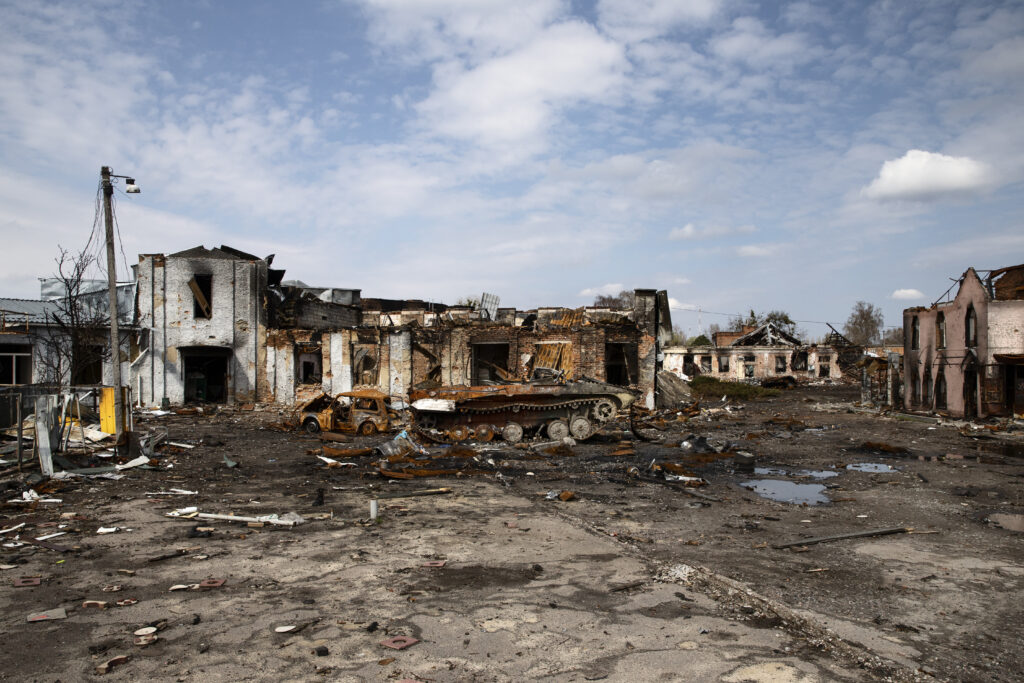
Jeffrey Sachs says Ukraine is a lost cause. Please watch his interview regarding Ukraine. The United States’s maneuvering has led step by step to war and the destruction of Ukraine. The entire Russia/Ukraine War is the result of a U.S. regime change venture, courtesy of U.S. neoconservatives, namely, President Biden, Victoria Nuland, Anthony Blinken, and Jake Sullivan.
When Victoria Nuland first discussed replacing the Ukrainian president, she was motivated by the fact that President Yanukovich had passed a neutrality agreement to head off war. The Biden administration chose war instead. Nuland’s meddling is common knowledge–her phone call was intercepted by the Russians and replayed in the U.S. Even so, there were several opportunities to avoid this war before it started, and the Americans refused to try.
On December 17, 2021 President Putin put on the table a draft U.S. Russia security agreement to avert the war. The agreement called for several things but the most important was an end to NATO enlargement. Jeffrey Sachs urged Biden to negotiate at that time, but the U.S. declared that the expansion of NATO is none of Russia’s business. Subsequently, Zalinski called for negotiations based on Ukraine’s neutrality, but the U.S. blocked negotiations.
This video lays out in more detail the reasons Jeffrey Sachs says Ukraine is a lost cause. The transcript is included in the video notes. Please take note of the steps that must follow the end of hostilities for true peace with Russia.
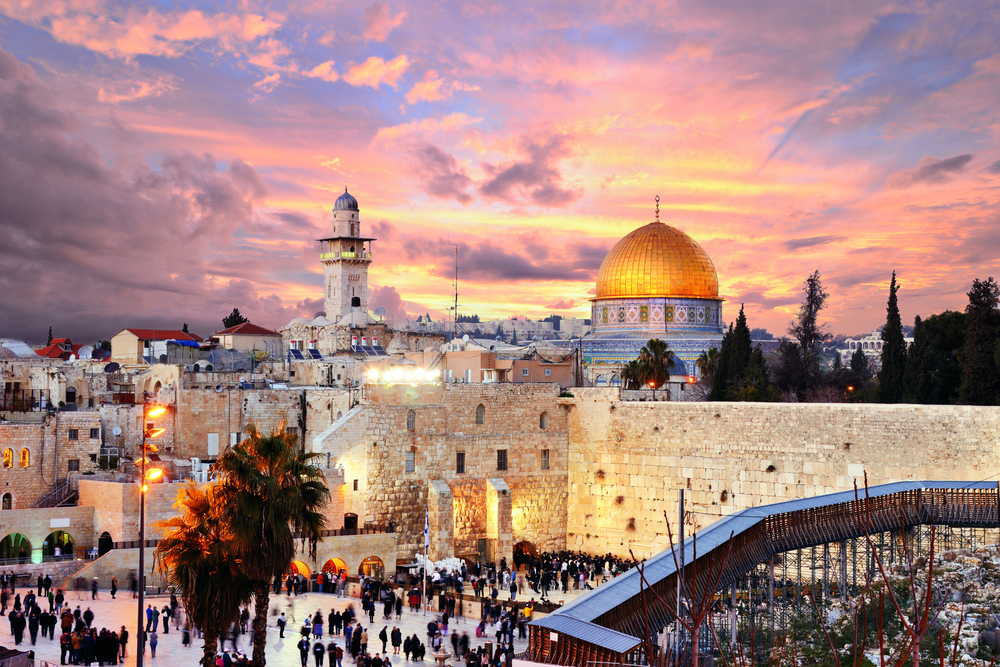
The Old City
This article is an acknowledgement of grave disorder in the halls of our government. It is a kind of disorder that can’t be set right by judgement, scolding and condemnation. It can only be addressed with blessings and prayers. This is a desperate call for blessings and prayers for a disputed land. Nothing less will do. But first the problem must be described.
In Gaza death comes for everyone. On October 7, we were horrified. Hamas attacked Jewish people on the border of Israel and committed carnage. Then, we were alarmed about Benjamin Netanyahu’s threats against Gaza. We beg him not to act out his own rage and the rage of the people of Israel. But he does not hesitate to wreak havoc. Now, each bomb that falls on Gaza falls on us too. We had such great hopes for a new direction for the world. Netanyahu signals that a new direction will not start in Israel.
Netanyahu’s Western allies have not stopped him either. They have encourage him in his course of action. So, we petitioned God to help the Palestinians. But that was before the hospitals and refugee camps were destroyed. Because he did not come to their aid, we can only hope God has taken the dead to paradise, and that he is not ignoring us as well. But that is small comfort for the loving parents and grandparents, aunts and uncles and children left behind. It is small comfort for all of us.
If there were to be divine intervention at this time, I would fear for the Israelis. They have satiated their rage and hubris as if there is no God. Can it be that Israel will be allowed to continue? If so, we clearly do not understand. All of those people–Jews and Palestinians–have already suffered, and many have died. Nothing will undo that. What satisfaction can anyone hope for now?
These are dark days, but they are not without purpose. Gaza tells us that Death comes for everyone. It’s time to forsake the vanity of comfort and security. It’s time to relearn that the chief purpose of this life in preparation for the next life. I’m not saying we should give up on this life. We must put this life in its place. Let’s begin.
We are watching the old world disintegrate while eagerly waiting for the new world to reveal itself. As we navigate through this transitional period, we will explore ancient practices and principles that have shaped the human race. We also also must acknowledging the horrors that currently pass for civilization. This process of recognizing and fostering a better world will include identifying ancient ideas that contribute to the disintegration of our world.
Who are 21st Century Progressives and what do they want?
21st Century Progressivism is not confined to a single political or social movement. Instead, it encompasses a wide range of individuals and groups who are united in their desire to pave the way for a better world. It is a mindset that transcends traditional and national boundaries to address the pressing issues of our time.
One of the key aspects of 21st Century Progressivism is the recognition of the interconnectedness of all beings and the environment. This holistic approach acknowledges that the well-being of humanity is intricately linked to the health of the planet. It encourages us to adopt sustainable practices and work towards a harmonious coexistence with nature.
Key principles
The most important principle of 21st Century Progressivism is probably the promotion of social justice and equality. It seeks to dismantle systems of oppression and discrimination, and advocates for inclusivity and fairness for all. This includes addressing issues such as racial inequality, gender discrimination, and economic disparities.
21st Century Progressivism emphasizes the importance of education and critical thinking. It encourages individuals to question prevailing norms and ideologies, and to seek knowledge from diverse sources. By fostering a culture of intellectual curiosity, progressivism aims to empower individuals to actively participate in shaping a better world.
We also call for a shift in our economic systems. We challenge the notion that unlimited growth and consumption are the ultimate goals. Instead, we advocate for sustainable and equitable economic practices. This includes supporting local businesses, promoting fair trade, and reevaluating our relationship with money and material possessions.
What is required of us?
As we embark on this journey of exploring 21st Century Progressivism, it is important to remember that change starts from within. Each of us has the power to contribute to a better world, whether it is through small acts of kindness or larger efforts to advocate for systemic change.
Let us embrace the principles of 21st Century Progressivism and work together to create a future that is more compassionate, just, and sustainable. The old world may be disintegrating, but the seeds of a new world are being sown. It is up to us to nurture and cultivate them.
error: Content is protected !!
Cookie Consent
We use cookies to improve your experience on our site. By using our site, you consent to cookies.