A Saved Version of the Wikipedia article
What is Patriarchy?
Patriarchy is a social system in which the father or eldest male is head of the household, having authority over women and children. Patriarchy also refers to a system of government by males, and to the dominance of men in social or cultural systems. It may also include tracing title through the male line (Webster’s New World College Dictionary). Feminist theory considers rule by men to be detrimental to the rights of women. However, patriarchal systems of government do not benefit all men of all classes.
Patriarchal Institutions versus Patriarchal Attitudes
The term patriarchy generally refers to institutions. Patriarchy can also refer to societal attitudes. Institutions may persist even after a population’s attitudes have changed.” Gordon Rattray Taylor used the words “patrist” and “matrist” to describe the attitudes. He noted that the outlook of the dominant social group seems to swing between the two extremes. However, the patrist assertion that the patriarchal system of authority was the original and universal system of social organization leads to the establishment of corresponding institutions.1
History of Western Patriarchy
Aristotle

In the third century BC, Aristotle taught that the city-state developed out of the patriarchal family. However, he thought the family and the state were different in kind as well as in scale.2 He wrote that the highest form of human community is the political community.
The Politics
In The Politics, Aristotle attempts to illustrate the nature of the hierarchies that exist in the political community and its subordinate communities. He then argues for an origin of male rule. In Chapter Thirteen he states that the sexes have different kinds of virtue, “just as those who are natural subjects differ (from those who rule by nature.)” Other types of community, such as the household, are subordinate and inferior to the polis.
Aristotle proposed that the household is subordinate to the political community because the aim of life in the household is the mere preservation of life, or the satisfaction of life’s daily needs, whereas the aim of membership in the political community is to live well. He also proposed that the household is inferior to the political community in the character of its rule. In the household, the man rules by virtue of his age and sex, monarchically at best and tyrannically at worst. In the polis, citizens choose their rulers on the basis of merit (Stauffer, Dana Jalbert Aristotle’s Account of the Subjection of Women).
Socrates

Both Plato and Aristotle seem to have followed the lead of Socrates. Socrates denied that citizens had the basic virtue necessary to nurture a good society. He equated virtue with knowledge unattainable by ordinary people. During Athens’ struggle with undemocratic Sparta, Socrates favored Sparta (Linder, Doug, The Trial of Socrates).
Plato

Plato never mentioned Socrates’ sedition against Athens. However, the cosmology of the Timaeus includes the idea that a man who lives well will live a happy and congenial life on his consort star. Failing this a man’s second birth will be as a woman (41E-42D, on the Creation of Souls).
The Athenians and the Egyptians Compared
Other ancient societies contemporary with Aristotle, as well as many Athenians, did not share these views of women, family organization, or political and economic structure.3 Egypt left no philosophical record. Herodotus, on the other hand, left a record of his shock at the contrast between the roles of Egyptian women and the women of Athens. For example, Egyptian women attended market and worked in trades. In ancient Egypt a middle-class woman might sit on a local tribunal, engage in real estate transactions, and inherit or bequeath property. Women also secured loans, and witnessed legal documents.
This changed, however. Aristotle educated Alexander the Great, and Alexander helped to spread Greek influence. However, Aristotle was far more extreme than Alexander. At one point, Alexander wanted to unite his two empires in equality. Aristotle insisted that all non-Greeks should be enslaved.
Aristotle and the Jews
About 200 BC the Jewish Philosopher Aristobulus of Panaeas claimed that Jewish revelation and Aristotelian philosophy were identical. Within 200 years scholars assumed that Aristotle derived his doctrine directly from Judaism. In the 12th century the Talmudist philosopher and astronomer, Maimonides harmonized Aristotlianism with Judaism. This changed subsequent rabbinical thought. Subsequent rabbis taught that “Eve was not created simultaneously with Adam because God foreknew that later she would be a source of complaint (Gen. R. xvii). “Nine curses together with death befell Eve in consequence of her disobedience” (Pirke R. E. Xiv.; Ab. R.N. ii. 42).
While Maimonides dared to contradict Aristotle’s ideas in matters of faith, it wasn’t long before the Islamic Philosopher Averroes, endorsed them without reserve. Aristotle in Jewish Legend
Adam and Eve: Patriarchy in Christianity
For the last 1800 years Christian leaders have placed great emphasis on the creation of Eve, believing that the story was historical fact, rather than androcentric myth. It became evidence of insurmountable character defects, not just for Eve but for all women. In the 2nd century Tertullian, the son of a centurion and a pagan until middle life, told women believers, “Do you not know that you are Eve?…Because of the death which you brought upon us, even the Son of God had to die” (De cultu feminarum, libri duo I, 1).
In the 4th Century, the basic attitude was one of puzzlement over the fact of woman’s existence. Augustine of Hippo questioned whether a woman could be any help for a man if the work of childbearing is excluded. However, it was only with Thomas Aquinas in the 13th century that Aristotle’s teachings emerged in the official teachings of Roman Catholicism. In the Summa Theologica, Aristotle asserted that women are misbegotten males (I 92 I ad 1). The influence of combining Aristotle’s theory with Biblical interpretations was devasting.
Christine de Pizan on the Christian Canon
In about 1404 Christine de Pizan wrote “Le livre de la cite des dames”. This was a systematic feminist treatise arguing against the misogyny in classical works and the Christian Canon. After the advent of printing, the discourse became known as “the Querelle des femmes” and continued for the next 400 years.
Sir Robert Filmer and the Divine Right of Kings
From the time of Martin Luther, Protestantism regularly used the commandment in Exodus 20:12 to justify the duties owed to all superiors. ‘Honor thy father,’ became a euphemism for the duty to obey the king. But Aristotle’s appeal took on political meaning primarily as a secular doctrine. Although many 16th and 17th century theorists agreed with Aristotle’s views concerning the place of women in society, none of them tried to prove political obligation on the basis of the patriarchal family until sometime after 1680. Sir Robert Filmer is primarily responsible for the patriarchal political theory. Sometime before 1653, Filmer completed a work entitled Patriarcha. He defended the idea that kings inherited their devine right from Adam, the first man of the human race. He based this theory on the Judeo-Christian tradition.
John Locke on Filmer
In 1688 John Locke called Filmer’s all-powerful prince “…this strange kind of domineering phantom called the ‘fatherhood’ which, whoever could catch, presently got empire and unlimited, absolute power.” In Two Treatises of Government, Locke asserted that if ‘honor thy father’, places everyone in subjection to political authority, then it couldn’t mean the duty owed to natural fathers, since they are subjects. By Filmer’s doctrine fathers have no power since power belongs solely to the prince. Locke also observed that those who propose political rights based on this commandment invariably omit the word ‘mother’ which is present in the Biblical verse. (His editor, however, made a note of Locke’s inconsistency in attributing natural law to the governance of relations between a father and his children, while stating that the law governing relations between a man and his wife is based on legality, or on Eve’s punishment after the Fall.).
Locke’s argument did not weaken Aristotle’s argument. It had become an anthropological doctrine.
Nineteenth Century Feminism
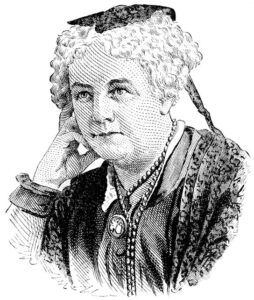
In the 19th Century, Sarah Grimké dared to question the divine origin of the scriptures. Later, Elizabeth Caddy Stanton used Grimke’s criticism of Biblical sources to establish a basis for feminist thought. She published The Woman’s Bible, which proposed a feminist reading of the Old and New Testament. Subsequently, feminist theory denounced the patriarchal Judeo-Christian tradition.
Theosophy, Evolution and Racism: Patriarchy at its Worst
In Europe, from about 1770, the rationalist Enlightenment and the desire for mystery had brought about a resurgence of a synthesis of Gnosticism, neoplatonism and kabbalistic theosophy. This particular version arose first in the utilitarian and industrial countries of America and England with the theosophy of Madame Helena Blavatsky. This had a profound impact in Germany where it fit into the lebenzreform movement. Blavatsky probably influenced Adolf Hitler through the writings of Guido von List and Lanz von Liebenfels.
Guido von List
List sought a chauvinistic mystique for the defense of Germandom against the liberal, socialist and Jewish political forces in the late Wilhelmine Era. His blueprint involved ruthless subjection of non-Aryans in a hierarchical state; qualification of candidates for education or positions in public service, as well as in professions and commerce, based on racial purity. All non-Aryans were to be slaves. His political principles included racial and marital laws, and a patriarchal society where only male heads had full majority and where only Ario-Germans had freedom and citizenship. Each family was to have a genealogical record, proving Aryan lineage. he proposed a new feudalism where only the first-born inherits. These ideas were published as early as 1911. They were similar to the Nuremberg Laws of 1935.
Lanz von Liebenfels
Darwinist writers, who wrote of blond, blue-eyed Aryans, were influential in the writings of von Liebenfels. Von Liebenfels had illiberal, pan-German and monarchical sentiments. He believed the lower classes were inferior races. It followed that they must be exterminated along with the weak. Socialism, democracy and feminism were his most important targets. Women were a special problem in his view because they were more prone to bestial lust. He advocated brood mothers in eugenic convents, sterilization and other practices that later influenced the Third Reich, apparent in Himmler’s anticipation of polygamy for his Schutzstaffel (SS), care of unmarried mothers in SS homes, and musings on the education and marriage of chosen women.4
Romantics and Marxists
By 1673, Francois Poullain de la Barre, “On the Equality of the Two Sexes”, had turned feminism into a systematic Enlightenment philosophy (as opposed to the previous Renaissance feminism). However, in 1861, Johann Jakob Bachofen, a German romantic and writer of the counter-Enlightenment said that matriarchy preceded patriarchy, and is superior to patriarchy on moral grounds. Bachofen influenced Karl Marx and Frederick Engles. Marxist analysis has been a basis for subsequent feminist thought.5
From the beginning, socialist feminists in France, for example, were challenged by the republic, which “oppressed them as workers and women; by Marxism, which ignores gender; and by the misogyny of their socialist brothers. This struggle continues within all parties of the left (History of Feminism).
Biology versus social construct debate
Starting from a foundation in the theories of biological evolution developed by Charles Darwin, many 19th century scholars formulated a linear theory of cultural evolution. One theory suggested that human social organization “evolved” through a series of stages. These stages progressed from animalistic sexual promiscuity, followed by matriarchy, and then, patriarchy. Most experts studying this subject have refuted this description (Lewis Henry Morgan, Encyclopedia Britanica).
Sociobiology
Biological justification for patriarchy did not begin with Charles Darwin, and it did not end with him. Biological theories of human behavior continue to multiply. Today these theories have proponents in the field of Sociobiology. Sociobiological anthropologists attempt to discover characteristics found in all human societies. This approach presumes that such universal traits are based on evolutionary biology and adaptation to environments.6 Sociobiologists consider patriarchy to be a human universal.
Steven Goldberg
Sociobiologist Steven Goldberg wrote in 1973, “the ethnographic studies of every society that has ever been observed explicitly state that these feelings (feelings of both sexes that the male’s will dominates the female’s) were present, there is literally no variation at all.”7 Goldberg’s findings had critics among anthropologists. Concerning Goldberg’s claims about the “feelings of both men and women” Eleanor Leacock countered that the data on women’s attitudes are “sparse and contradictory,” and that the data on male attitudes about male-female relations are “ambiguous.” Also the effects of colonialism on the cultures represented in the studies were not considered.8
Edward O. Wilson
In 1975, Edward O. Wilson published his book, “Sociobiology: The new synthesis”. Scientists objected to his approach. Wilson alleged that sociobiology was a new discipline, but his claims were not new, and had been thoroughly refuted on scientific grounds. The refutations cited the works of Herbert Spencer, Konrad Lorenz, and various scientists, students and teachers. (Gould, Steven J. Against Sociobiology).
Herbert spencer
Herbert Spencer, in 1850, elaborated “an analogy between Society and Organism” in the “Principles of Sociology.” Spencer’s arguments implied that societies all grow in the same way and that, judging by this abstract idea of society, ‘undeveloped’ societies had been arrested in their growth. Spencer not only wanted to demonstrate that an evolutionary process was valid but to establish the actual course of social evolution. This led to hypotheses of social conditions in imaginary primeval societies. Relevant works included Sir Henry Maine’s theory of patriarchy, as well as Bachofen’s theory of matriarchy among others.9 At the present time, both theories are considered mythological. Still, sociobiologists remain skeptical about rudimentary matriarchies, which they claim never existed.
Like Spencer in 1850, E.O. Wilson treated behavior and social structure as organs, which are extensions of genes that have survived because of their adaptive value. He speculated that there must be conformer genes; genes favoring spite, homosexuality, creativity, entrepreneurship, drive and mental stamina. But there is no evidence for the existence of such genes. On the other hand he said that social unrest is simply maladaptive.
R.A. Sydie: a Feminist Critique of Sociobiology
Sociobiology regards the genetic structure as the prime motivator of social behavior. It follows that natural selection favors individuals who maximize their genetic fitness. A key factor in maximizing genetic fitness is the parental investment in the offspring. Since females have a greater investment than males they behave differently than males. Also, this investment in offspring leads to mutual exploitation between heterosexual partners. Conflict arises when both partners try to persuade the other to invest more time.
According to professor of sociology, R.A. Sydie, sociobiologists believe that these theories explain female coyness and male philandering and aggressiveness.10
David P. Barash thought they illustrated the biological necessity of women being relegated to the nursery and men deriving satisfaction from their jobs.11
Sydie on Sociobiology and Male Supremacy
The feminists critiqued sociobiology as a discipline. Their main argument was that it continued sociology’s original partiality. Sociology had been partial from its inception because it ignored the viewpoint of women and represented only the male viewpoint. Sociologists Emile Durkheim, Sigmund Freud, Max Weber, Karl Marx and Frederick Engels had all used biology to explain women’s social roles.
Sydie argued that as long as female reproductive capacity is seen as an essential difference, affected very little by social relations, then even Marx’s theoretical equality of ‘true love’ is mythical. (Marx and Engels thought that when private property was abolished, patriarchy would be abolished also. But monogamy would not necessarily disappear; it would be transformed into “true sex love”.) Speaking of sociobiology in particular, Sydie said that its theories propose a biological determination of behavior, the source of which is individual genotypes. With its claim that anatomy is destiny, sociobiology challenges feminist theory.
Patriarchy in anthropology, archaeology and mythology
One danger in presenting anthropological or archaeological data about human societies is the tendency to make generalizations about “the whole development of society.” The idea that a model of human development can be found that will be true for all people, like Bachofen’s theory of matriarchy and Sir Henry Maine’s theory of patriarchy, is based on theories of biological evolution. Such theories when applied to social relations have been discredited. But the tendency persists to use any data for purposes of the debate, either to prove that patriarchy is universal and therefore it must be good, or to prove that it is not.
Probably the best that can be hoped for in presenting evidence is to challenge old assumptions about the study of human culture. One of these assumptions, evolutionary theory, has already been mentioned. Also many theorists fall into the habit of reasoning from modern social conditions and projecting conclusions onto prehistorical societies. A certain amount of bias will always be present.
Anthropology
First we will look at recent anthropological evidence. The evidence does not support the idea that patriarchy is a natural evolutionary response. In simple societies which match evolutionary conditions women are not occupied solely with caring for children and they contribute about 44% of the food. In one study, one third of the societies studied were egalitarian. The men were not warlike or controlling of women and many other adaptive behaviors evolutionary psychologists would expect were not present.
Mate selection is a core area of evolutionary psychology. It has been shown that choices can be influenced by the observed choices of others. In fact, it is thought that in some cases cultural evolution may change “the extent to which biological evolutionary accounts work at all.” 12
A third study suggests that egalitarianism is a matter of degree. Susan Kent found that egalitarianism “is a continuum, not an absolute entity; societies are only more or less egalitarian.” Recent studies show that divisions of work, wealth and political power produce “inegalitarian” social structures. Egalitarianism. (Hunter-Gatherer Wiki. Cited March 18, 2012. Available: Http://foragers.wikidot.com/egalitarianism)
Tradition
As already mentioned, assumptions about patriarchal systems were actually derived from certain interpretations of the Bible. Mythologist Joseph Campbell wrote in “the Power of Myth”, that the Hebrews were part of an invading force consisting of Indo-Europeans and Semites who drove out the goddess sacred to the Canaanite people. Campbell said these goddess-worshipping people were agricultural, whereas the Semites and Indo-Europeans were herding/hunting peoples and natural killers.
He lauded the Greeks for the fact that Zeus was married to a goddess, giving them credit for the tradition of the virgin birth, and condemning the Hebrews for having no comparable mythology 13.
Archaeology Calls Tradition Into Question
However, archaeological evidence has shown that when the Hebrews began to settle in Palestine, there was already extreme economic stratification under an Egyptian administration. It is likely the Hebrews belonged to marginal units consisting of permanent peoples and nomads with distinct values and principles. “One of the cultural traits of the rulers of Palestine in the Middle Urban age is the custom of burying the dead with their horses and donkeys. The best examples in Palestine of the custom were found by Sir Flinders Petrie at Tell el-Ajjul, ‘the tell of the chariots,’ near Gaza.” This represents Hyksos and not Hebrew influence, as the Hebrews did not bury humans with animals.
Hebrews, Hyksos and Canaanite Divinities
When the Hyksos rule ended in Phoenicia about 1600 BC, it brought no changes to the social and political structure of Palestine. Canaanite divinities were “ruthless, atrocious and fearful”. There was human sacrifice, sacred prostitution, and serpent worship. Totalitarianism virtually enslaved the majority of the population, and so the nobility lived in fortified cities. Archaeologist Emmanuel Anati found a lack of creativity and individuality in the art and material culture in this period and attributed this to the hardships of the feudal system and the brutal religion.14
However, there are Biblical claims that the Hebrews slaughtered the inhabitants of Canaan. Bible scholar Jacob Rabinowitz argues that these claims are embellishments added long after the actual event. “There was of course no “conquest” of Canaan, but rather a gradual synthesis of the Hebrew migrants with the indigenous population…it is very important at a certain stage in a nation’s growth to imagine that they were once great bullies.”15
The fact remains that patriarchal institutions and attitudes are highly influential in Western civilization. The evidence suggests that social stratification and large differences in wealth go hand-in-hand with patriarchy.
- Taylor, Gordon Rattray. Theories of Matriarchy and Patriarchy. Sex in History. ↩︎
- Lock, John, “Two Treatises of Government, with a supplement Patriarcha by Robert Filmer, edited with an introduction by Thomas I. Cook, New York. Hafner Press, 1947. ↩︎
- John Temple Bristow, What Paul Really Said About Women. Harper San Francisco, 1991. ↩︎
- Nicholas Goodrick-Clarke, The Occult Roots of Nazism: Secret Aryan cults and their influence on Nazi ideology: the Ariosophists of Austria and Germany, 1890-1935, New York University Press, 1992. ↩︎
- Stjepan Gabriel Meštrović, Durkheim and postmodern culture. A. de Gruyter, New York. 1992. ↩︎
- Anthropological theory: An introductory history, McGraw Hill, New York, 2004. ↩︎
- Goldberg, Steven. The Inevitability of Patriarchy. William Morrow. New York. 1973. ↩︎
- Leacock, Eleanor. Review of the Inevitability of Patriarchy. William Morrow, New York. 1973. ↩︎
- Childe, V Gordon. Social Evolution. Richard Clay and Co., Ltd., Suffolk,England, 1951. ↩︎
- Sydie, R.A.. Natural Women Cultured Men. New York University Press. 1987. ↩︎
- Barash D.P. “Sociobiology and Behaviour“. New York: Elsevier 1977. ↩︎
- Introduction, cultural transmission and the evolution of human behaviour, “Philosophical transactions of the Royal Society“, vol. 363, Nov. 2008. ↩︎
- Campbell, Joseph. The Power of Myth. Mystical Fire Video. New York. 2001. ↩︎
- Anati, Emmanuel. Palestine Before the Hebrews. Knopf, New York. 1963. ↩︎
- Rabinowitz, Jacob, The Faces of God, Spring Publications, Woodstock CT. 1991. ↩︎
Leave a Reply
You must be logged in to post a comment.